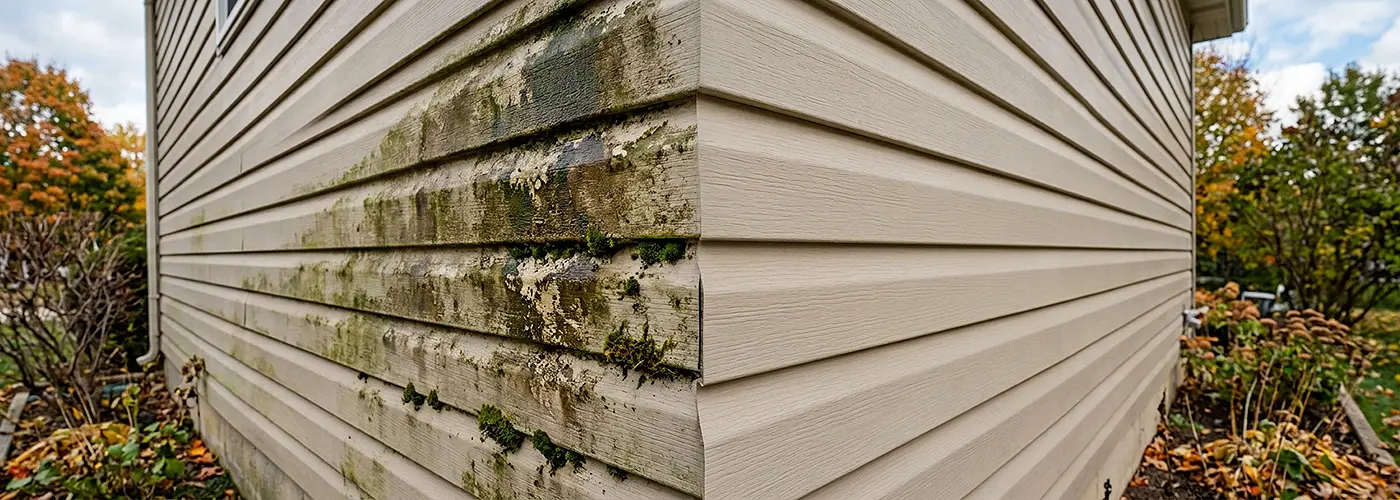
Here's why the window before winter matters, and what a proper cleaning needs to cover before temperatures drop for good.
Why organic growth turns a cosmetic problem into a structural one
Algae, moss, and lichen don't just sit on siding like dust. They hold moisture against the surface, turning summer growth into a potential winter problem.Algae and mildew create a damp film, while moss can work into seams and under panel edges. Lichen is even more stubborn, bonding directly to the surface.
The problem worsens when temperatures drop below freezing. Water expands by roughly 9 percent as it freezes, putting pressure on damp seams, gaps, and panel edges. One freeze may cause little damage, but repeated freeze-thaw cycles can gradually widen gaps, warp panels, and create openings where more water can get in.
What this actually looks like once spring arrives
This kind of damage catches people off guard because it's invisible while it's happening. Nobody's out checking their siding during a January cold snap. What shows up instead, months later, tends to include:- Stains that don't wash off anymore. Algae or mildew that's been sitting through a winter of freeze-thaw cycles often leaves discoloration that's worked into the material itself, rather than sitting on top of it the way it did in the fall.
- Warped or bowed panels, particularly on vinyl siding, where trapped moisture expanded repeatedly behind a section that couldn't dry out.
- Soft spots on wood siding or trim, where moisture that got in during the winter has had months to start breaking down the wood fiber.
- Gaps or lifted edges that weren't there in the fall, created by the same repeated expansion working at a seam or panel edge.
- A second growing season's head start for algae and moss, since a section of siding that stayed damp all winter is primed for regrowth as soon as temperatures warm up again.
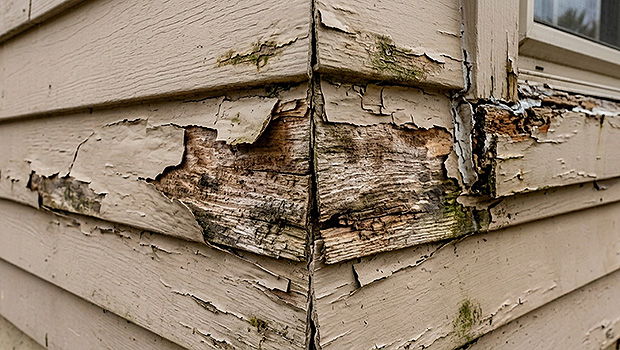
None of this is dramatic in the moment. It's a slow accumulation of small physical changes that add up to a siding surface in noticeably worse shape than it was the previous fall.
Why soft washing is the right method here
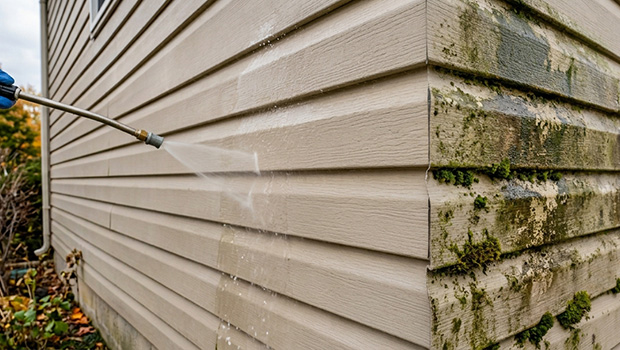
Cleaning siding before winter isn't just about appearance, so the method matters as much as the timing. Soft washing uses low pressure and a cleaning solution to break down algae, mildew, and moss at the source rather than simply removing what's visible.Pressure washing can do the opposite. High pressure may force water behind vinyl, wood, or fiber cement siding and into seams. Once temperatures drop, that trapped moisture can contribute to the freeze-thaw damage you're trying to prevent.
The spots that need a second look
A general wash covers the whole exterior, but a few specific areas tend to hold onto organic growth and moisture longer than the rest of the house, and they're worth checking individually before the season turns:- north-facing walls, which get the least direct sun and stay damp longest;
- areas under eaves and overhangs, where reduced airflow and shade create a similar effect even on walls that otherwise get good sun;
- around windows, where trim details and slightly rougher surfaces give algae and grime more to hold onto;
- behind shrubs, vines, or other vegetation growing close to the house, which blocks sun and airflow right where it's needed most;
- horizontal surfaces like window sills and trim ledges, where pollen, leaf litter, and general debris accumulate and hold moisture even when the vertical siding nearby looks clean.
These areas are also most likely to still show a problem after a wash that only covered the obviously dirty sections, so it's worth confirming they got real attention, not just a quick pass.
Timing: Work with the weather, not a date on the calendar
There's no single deadline for cleaning siding before winter. What matters is whether temperatures and humidity allow the surface to dry completely afterward.As a practical guide, exterior washing is best when daytime temperatures stay above roughly 40°F, and the siding has enough time to dry before overnight freezing. Between 32°F and 40°F, drying becomes less reliable. Once nighttime temperatures consistently fall below freezing without much daytime warming, it's generally better to wait.
The goal is to clean during a stretch of mild, above-freezing weather rather than waiting for the first hard freeze.
If you're not sure how much time you have left this season, or want to get on the schedule before the weather makes the decision for you, we're glad to take a look. At HiCleaners, we offer a free inspection and can clean your home's exterior cladding before the first frosts "seal in" the dirt accumulated over the season.
Request a free estimate or call 781-333-8758.
 Facebook
 LinkedIn
 Pinterest
 Twitter