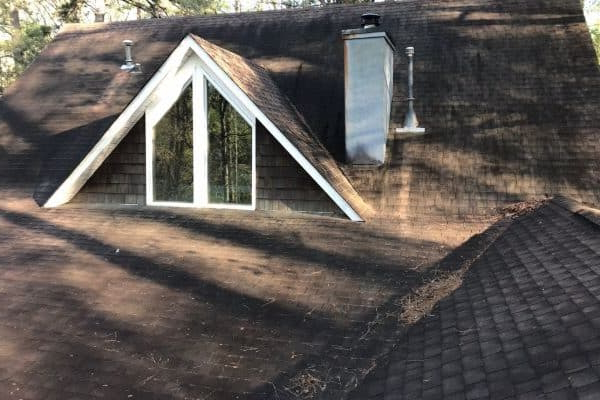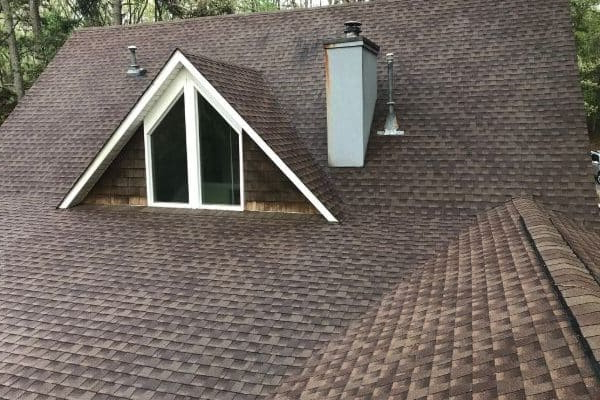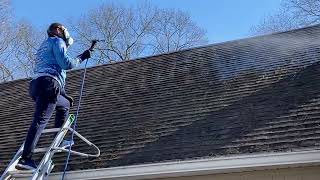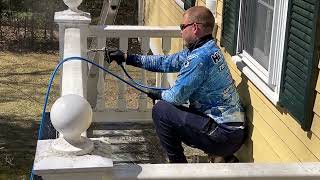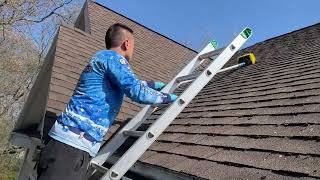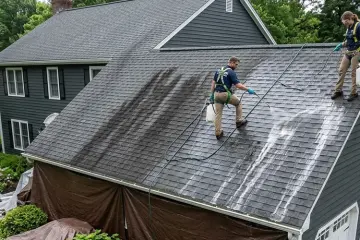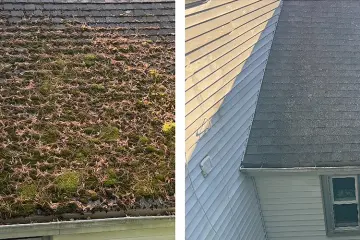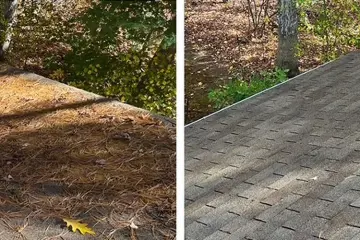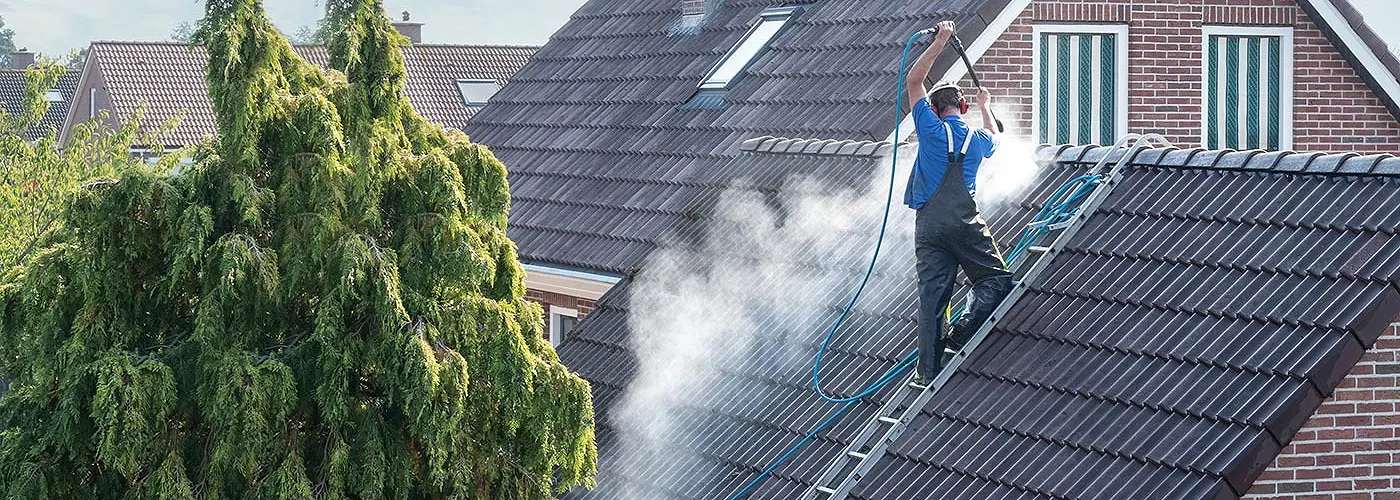
At HiCleaners, we've treated over 10,000 roofs across Massachusetts using the soft washing method recommended by the Asphalt Roofing Manufacturers Association (ARMA) – low-pressure, professional-grade bio-treatment, no shingle damage, no voided warranties. We don't just clean what's visible. We treat the bacteria at the root so it doesn't come right back.
What's actually growing on your roof – and why it matters
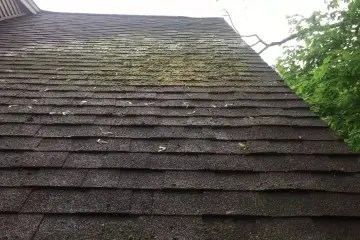
Most homeowners assume the dark staining on their roof is dirt, pollution, or age. It's almost never any of those things. Here's what's actually up there:- Gloeocapsa Magma (black streaks)
The most common culprit. This cyanobacterium spreads via airborne spores and feeds on calcium carbonate (limestone) in asphalt shingles. As it feeds, it breaks down the granule coating that protects the shingle from UV damage. Once the granules are gone, the shingle degrades rapidly. The dark pigmentation you see is the bacteria's protective sheath – a sign of a well-established colony that has been there for months or years. - Moss
Moss takes root in shaded, north-facing sections of your roof and in the joints between shingles. Unlike algae, moss has physical root structures that work their way under shingles and lift them – creating gaps where water and ice can penetrate. Heavy moss growth significantly accelerates shingle failure. - Lichen
The most stubborn and damaging organism on this list. Lichen is a symbiotic combination of algae and fungus that physically bonds to the shingle surface. Removing lichen requires professional-grade chemical treatment – attempting to scrub or pressure-wash it off pulls the granules with it, permanently damaging the shingle. - Mold and Mildew
More common on wood shake and cedar roofs, mold and mildew cause discoloration and accelerate rot in organic roofing materials. They also thrive in gutters and on soffits and fascia boards adjacent to the roof.
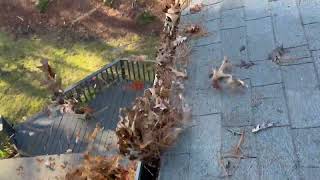
If mold has spread to your gutters, that's a separate problem worth addressing – our gutter cleaning service handles buildup, blockages, and biological growth inside the gutter system.
Every one of these organisms is damaging your roof while it grows. A roof replacement in Massachusetts costs $15,000–$ 30,000 or more. A soft wash roof cleaning costs a fraction of that – and can add 10 to 20 years to the life of the roof you already have.
Why soft washing – not pressure washing: Is the right method for roofs
This distinction is important, and we want to be direct: pressure washing a roof is the wrong approach, and any company offering it puts your roof at risk.Here's why:
Asphalt shingles are coated in granules – tiny mineral particles embedded in the surface that reflect UV rays and protect the underlying asphalt mat. High-pressure water blasts these granules off. Once they're gone, the shingle is permanently compromised. You've paid to have your roof cleaned and, in the process, lost years of its useful life.
Soft washing works differently:
- low-pressure application (similar to a garden hose) – zero shingle damage;
- a professional-grade biodegradable cleaning solution is applied and left to dwell on the surface;
- the solution kills bacteria, moss, lichen, and mold at the biological level – not just washing away what's visible;
- rain reactivates residual solution over the following weeks, continuing to break down remaining organic matter;
- results are longer-lasting – typically 3–5 years before retreatment is needed.
HiCleaners is an F9 Authorized Applicator and PWNA-certified. We use professional-grade treatments, not diluted consumer products.
Roof cleaning for homeowners
Protect your single biggest home investment. Restore your curb appeal. Add decades to your roof.Your roof is the most expensive component of your home's exterior – and the one most homeowners ignore until something goes wrong. By the time you're seeing significant black streaking, moss, or lichen growth, the damage has already started. The good news: professional soft-wash treatment can stop and reverse most early- to moderate organic growth before it causes irreversible shingle damage.
Why Massachusetts homeowners choose HiCleaners for roof cleaning:
- over 10,000 roof treatments completed across Massachusetts and Southern New Hampshire;
- we use ARMA-approved soft washing – no pressure, no granule loss, no shingle damage;
- F9 Authorized Applicator – professional-grade biocidal treatments that kill organisms at the root;
- all technicians are fully insured, carry workers' compensation, and are background-checked;
- eco-friendly, biodegradable solutions – safe for plants, pets, and the surrounding landscaping;
- 30-day satisfaction guarantee – if results aren't what we discussed, we return at no charge;
- we inspect the roof and report any damage or concerns we find while we're up there;
- available 7 days a week, including weekends.
Suitable for: asphalt shingles, architectural shingles, wood shake, cedar, metal roofing, and most tile roofing systems. We assess the roof type and condition before treatment and will tell you upfront if we see anything that affects our approach.
Roof cleaning for commercial properties and property managers
A clean roof protects your building, your tenants, and your bottom line.For commercial properties, roof cleaning is preventive maintenance – not cosmetic. Organic buildup on flat and low-slope commercial roofs causes standing water, membrane degradation, and eventual interior leaks. On sloped commercial roofs, the same bacteria and moss dynamics that affect residential shingles apply – with bigger consequences given the scale and cost of commercial roofing systems.
Why property managers choose HiCleaners for commercial roof cleaning:
- General Liability Insurance – full coverage, with Certificate of Insurance (COI) available on request;
- expertise with flat, low-slope, and TPO membrane roofs – treatment protocols specific to membrane systems, not just asphalt shingles;
- flexible scheduling – early morning, evenings, and weekends to minimize disruption to tenants and operations;
- multi-building programs for apartment complexes, HOAs, and commercial campuses;
- energy efficiency benefit – a clean, reflective roof reduces solar heat absorption and can lower HVAC costs on commercial buildings;
- written service documentation for maintenance records and insurance purposes;
- recurring maintenance contracts available – most commercial properties benefit from cleaning every 12–18 months.
Roof cleaning vs. roof replacement – the numbers that matter
| Roof Cleaning | Roof Replacement | |
|---|---|---|
| Average cost (MA) | $400–$800 | $15,000–$30,000+ |
| Time required | Half a day | 1–3 days |
| Extends roof life by | 10–20 years | N/A (starts clock over) |
| Disruption | Minimal | Significant |
| How often needed | Every 3–5 years | Once per roof lifetime |
A healthy roof that's maintained should last 30–40 years. An untreated infected roof can fail in 15. Regular soft-wash cleaning – starting before growth becomes severe – is the single most cost-effective way to protect your roofing investment.
How to tell if your roof needs cleaning
You can assess this yourself from the ground with binoculars, or from a window on an upper floor. Look for:- black or dark brown streaking running vertically down the roof – Gloeocapsa Magma. Almost universally present on Massachusetts roofs that haven't been treated within the last 3–5 years;
- green patches on north-facing slopes or under overhanging tree branches – moss or algae;
- gray-green crusty patches that look almost like they're part of the shingle – that's lichen, and it's the most serious growth to have;
- visible lifting at shingle edges in areas with heavy moss growth;
- dark staining along the fascia or soffit adjacent to the roof – mold or mildew spreading from the roof surface;
- shingle granules in your gutters – this is normal to some degree, but a heavy volume of granules indicates accelerated shingle degradation, often linked to biological growth.
Our roof cleaning process – step by step
- Free Estimate & Roof Assessment
Call 781-333-8758 or fill out the online form. For most jobs, we can provide a quote based on roof size, pitch, and photos. For complex roofs or heavy infestations, we schedule a free on-site inspection. - Pre-treatment preparation
We pre-wet surrounding plants, landscaping, and any vulnerable surfaces before application. Gutters are cleared if needed, so runoff flows freely during and after treatment. - Solution application
A professional-grade biodegradable soft-wash solution is applied at low pressure across the entire roof surface, paying particular attention to areas of visible growth and north-facing sections. - Dwell time
The solution is left to work. Depending on the product and conditions, dwell time is typically 15–30 minutes before rinsing, with the ongoing reactivation cycle continuing for weeks after via rainfall. - Rinse
A low-pressure rinse removes the treated biological matter. We are careful around skylights, solar panels, vents, and any rooftop equipment. - Ground cleanup & inspection report
We rinse down any solution that reached surrounding surfaces, confirm gutters are flowing, and report any roofing concerns we observed during the service. - 30-Day Guarantee
If results don't meet expectations within 30 days, we return at no charge.
Pricing
Roof cleaning typically runs $400–$800 for most Massachusetts homes, depending on:- square footage of the roof;
- pitch and accessibility;
- severity and type of organic growth (lichen requires additional treatment);
- roof material type.
Service areas – roof cleaning in Massachusetts
We provide roof cleaning and soft washing services throughout Massachusetts and Southern New Hampshire. Key areas include:- Greater Boston: Boston, Cambridge, Somerville, Brookline, Newton, Watertown, Medford, Malden, Everett, Revere, Chelsea, Waltham, Belmont, Arlington, Lexington;
- North Shore: Salem, Peabody, Beverly, Gloucester, Marblehead, Danvers, Newburyport, Swampscott, Ipswich, Hamilton, Rockport;
- South Shore: Quincy, Braintree, Weymouth, Hingham, Scituate, Plymouth, Cohasset, Duxbury, Marshfield, Hanover;
- MetroWest: Framingham, Natick, Wellesley, Needham, Dedham, Norwood, Weston, Wayland, Hopkinton, Sherborn;
- North of Boston: Woburn, Burlington, Wilmington, Billerica, Lowell, Haverhill, Reading, Andover, North Reading, Tewksbury, Chelmsford.
781-333-8758
10,000+ roofs treated – ARMA-Approved method – F9 Certified – Fully insured.