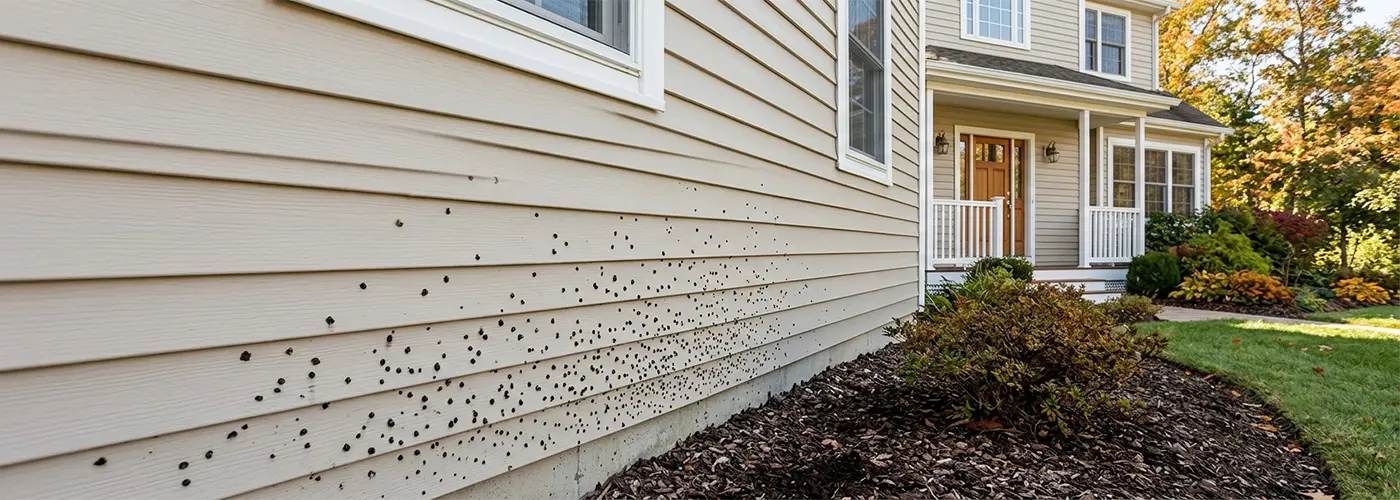
If you see small black or brown tar-like dots on your siding or under your eaves – particularly near mulched beds – artillery fungus is likely the cause.
What is artillery fungus?
Artillery fungus, scientifically called Sphaerobolus, is a wood-decaying fungus that grows in mulch. It thrives in cool and damp conditions. In places like Massachusetts, it becomes especially active during spring and fall when moisture levels are high.Unlike regular mold or mildew, artillery fungus behaves differently. It builds internal pressure and “shoots” its sticky spores toward light-colored surfaces. The spores can travel several feet before attaching firmly to vinyl siding, painted trim, soffits, window frames, decks, fences, and even nearby vehicles.
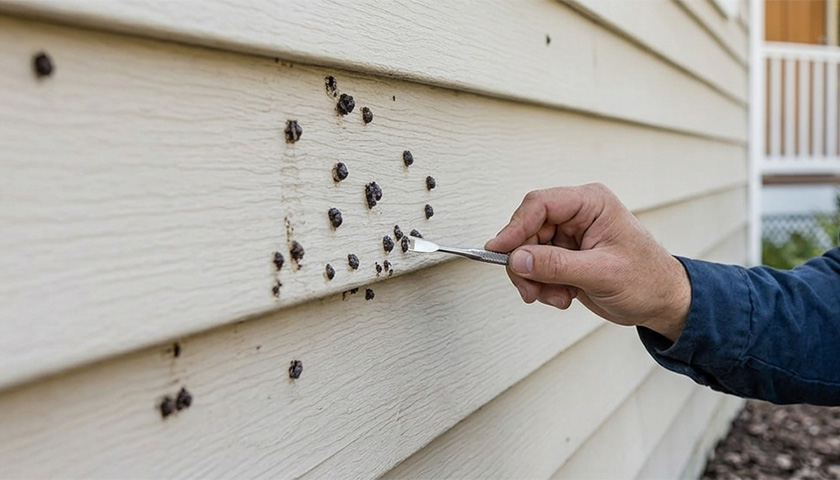
After they stick, the spores harden and become tiny black or dark brown dots that resemble tar splatter. The problem is not only cosmetic. Each spore forms a tough outer shell, which makes it extremely difficult to remove once it fully cures.
Why pressure washing often makes the problem worse
Many homeowners assume that pressure washing will blast the spots away. Unfortunately, this approach frequently creates more problems than it solves.Pressure washing artillery fungus can:
- Spread the stain
High pressure may smear the spore rather than remove it, leaving a gray or shadowed mark on the siding. - Damage vinyl or paint
Vinyl siding can crack or warp under excessive pressure. Painted surfaces may chip or peel. - Leave permanent “ghost” marks
Even if the spore is dislodged, a visible outline often remains where the pigment bonded to the material.
Because artillery fungus behaves more like hardened adhesive than dirt, removal requires a different strategy.
Can soft washing remove artillery fungus?
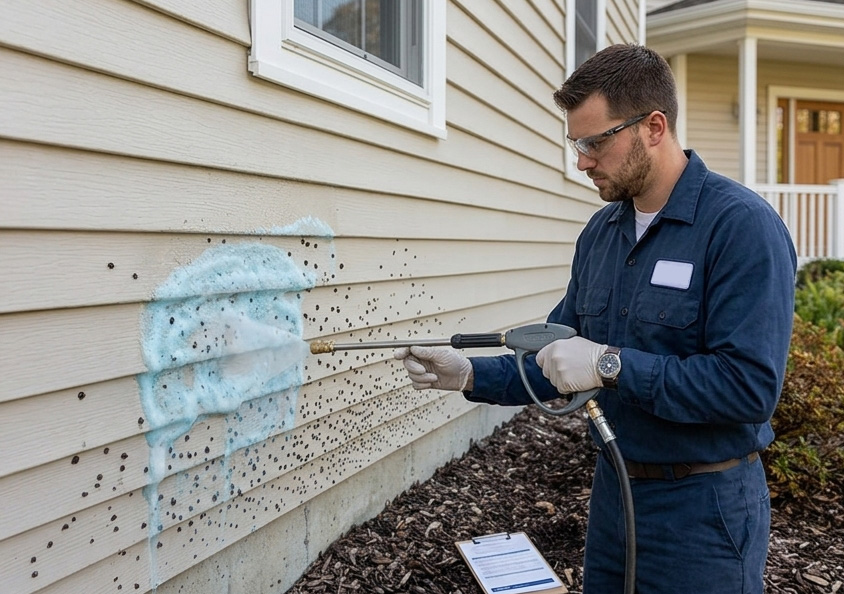
Soft washing is a low-pressure exterior cleaning method that uses specialized cleaning solutions to break down organic growth and loosen bonded contaminants.When properly applied, soft washing can remove a significant percentage of artillery fungus stains, particularly if:
- the spores are relatively new;
- the siding surface is smooth and non-porous;
- professional-grade detergents are used;
- the process is combined with careful manual removal when necessary.
In many cases, professional exterior house washing dramatically improves the appearance, even if it does not achieve 100 percent removal.
Why do Massachusetts homes see this problem frequently
Artillery fungus grows best in cool temperatures and areas with steady moisture. It is commonly found in shaded mulch beds, especially those made from hardwood bark or shredded wood. These conditions allow the fungus to develop and spread more easily.Massachusetts and other New England states provide an ideal environment, particularly in spring and fall. Homes with light-colored vinyl siding near mulched landscaping are at higher risk.
As organic mulch begins to break down, it creates the perfect setting for fungal growth. Decomposing wood becomes a natural food source, allowing artillery fungus to thrive and produce spores.
Long-term prevention: Addressing the root cause
Removing stains is only part of the solution. Preventing recurrence requires addressing the source.The most effective prevention strategies include:
- Replacing organic mulch
Switching from wood-based mulch to decorative stone, gravel, or rubber mulch significantly reduces fungal growth. - Increasing sun exposure
Pruning back dense shrubs improves airflow and reduces moisture retention. - Creating a buffer zone
Maintaining distance between mulch beds and siding can minimize spore contact. - Using fungus-resistant mulch products
Some commercial mulches are treated to slow fungal development, though they are not foolproof.
Without prevention, new spores can begin appearing within months after cleaning.
What results should you expect?
When it comes to exterior house washing for artillery fungus, realistic expectations are important. In most cases, you can expect noticeable visual improvement. Many surface-level spores can be removed, and surrounding organic buildup will also be reduced. The result is usually a cleaner and brighter exterior.However, some dark marks may remain where spores have permanently bonded to the surface. No reputable exterior cleaning company should guarantee complete removal in every situation. The longer the spores stay untreated, the higher the risk of permanent staining.
When should you act?
The sooner artillery fungus is treated, the better the results. Fresh spores are much easier to remove before sun exposure, and oxidation makes them bond more tightly to the surface.If you start seeing new black specks near mulch beds, staining under roof overhangs, or spots that appear mostly on the sun-facing side of the house, it is a good idea to schedule an early evaluation. Acting quickly can help prevent permanent staining.
Professional evaluation makes the difference
Not all dark spots are artillery fungus. Sometimes the issue may involve mold, asphalt shingle staining, or insect residue. A professional exterior assessment can determine:- whether the stains are removable;
- what cleaning method is appropriate;
- whether siding has been permanently affected;
- how to prevent recurrence.
Each home’s surface material responds differently to cleaning agents, so tailored treatment matters.
If you are seeing tar-like black dots near mulch beds, a professional evaluation is the best next step. We offer a free assessment to determine whether your stains are removable and what results you can realistically expect.
 Facebook
 LinkedIn
 Pinterest
 Twitter