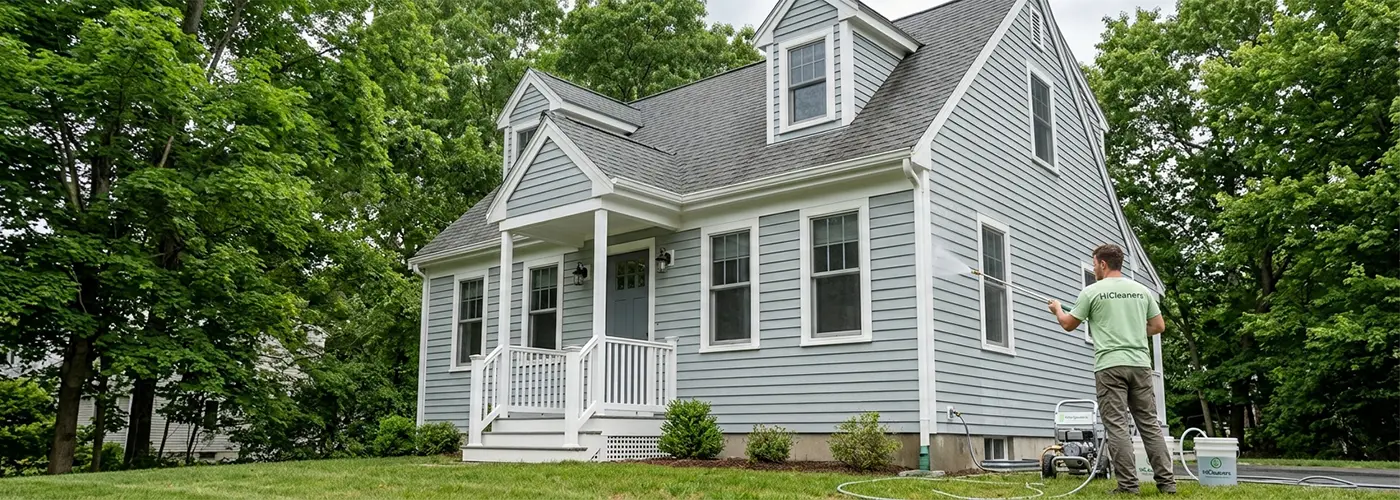
A quality exterior paint job can easily last 10 years or longer, but only if the siding stays clean. Wash it the wrong way, and you can shorten the life of that paint in a single afternoon. Ignore it altogether, and mold, mildew, and algae will slowly do the same thing over time.
So how often should painted wood siding actually be cleaned? For most Massachusetts homes, the answer is simpler than many homeowners expect.
How often does painted wood siding need to be washed?
For most painted-wood homes, a professional soft wash every 1 to 2 years is the best way to protect both the paint and the underlying wood.The right schedule depends less on the paint's age and more on the conditions around your home.
Once a year is usually the better choice if your home:
- sits beneath mature trees;
- has north-facing walls that stay damp;
- receives little direct sunlight;
- is close to the coast or in an area with consistently high humidity.
Those conditions are common throughout many parts of Massachusetts, where long, damp springs and humid summers create the perfect environment for algae and mildew.
Every two years is often enough if your home gets plenty of sun, has good airflow around the siding, and isn't surrounded by heavy tree cover.
The goal isn't to wait until the siding looks dirty from the street. It's to remove organic growth while it's still a light surface film, before it has a chance to work into the paint and begin causing real damage.
Why regular cleaning makes such a difference
Painted wood is different from vinyl or fiber cement. The paint protects the wood, but it's also the first thing to break down when moisture is allowed to linger.Many homeowners assume peeling paint is simply part of getting older. Sometimes that's true. More often, though, the problem starts with moisture.
Mold, mildew, and algae don't just sit on the surface. They settle into tiny imperfections in the paint and around joints, where they trap moisture against the siding. Over time, that moisture works its way beneath the paint film, weakening its bond with the wood. What starts as a few dark streaks can eventually turn into bubbling, cracking, and peeling.
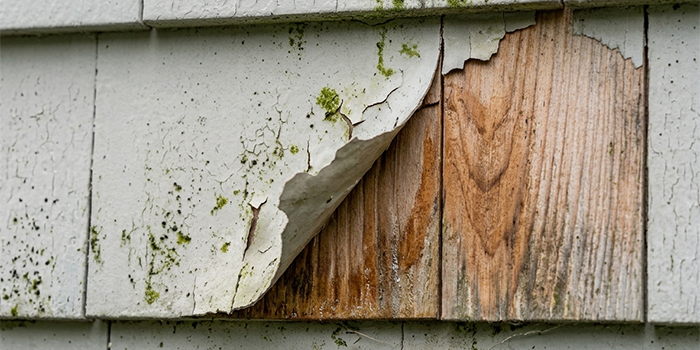
Here in New England, painted wood already deals with plenty of seasonal movement. Winter freezes, spring rain, summer humidity, and fall temperature swings all cause wood to expand and contract. Anything that keeps that wood damp for longer only speeds up paint failure.
Keeping the siding clean is one of the easiest ways to extend a paint job's lifespan.
The cleaning method matters just as much
This is where many homeowners accidentally create a much bigger problem than the dirt they were trying to remove.Pressure washing painted wood almost always does more harm than good.
High-pressure water can:
- Force moisture behind the paint and into the wood
Once water gets trapped beneath the paint, it takes much longer to dry. That lingering moisture weakens the paint's bond with the wood and often leads to bubbling and peeling. - Strip away perfectly sound paint that still had years of life left
Even paint that's still firmly bonded to the wood can be lifted by excessive pressure, leaving bare patches that require touch-ups or a complete repaint much sooner than expected. - Damage the wood fibers themselves, especially on older homes
Older wood is often softer and more vulnerable to high pressure. A strong spray can raise the wood grain, leave gouge marks, and create a rough surface that's harder to repaint and protect.
We've seen homeowners spend an afternoon pressure washing their siding, only to discover loose paint, raised wood grain, and areas that suddenly need repainting.
Soft washing avoids those problems entirely.
Instead of relying on pressure, soft washing uses specialized cleaning solutions that break down mold, mildew, algae, and other organic buildup. The surface is then rinsed with water at roughly the pressure of a garden hose. The cleaning solution does the heavy lifting, while the gentle rinse simply washes everything away.
That means the paint stays intact, moisture isn't forced into the wood, and the organisms causing the problem are removed instead of simply blasted across the surface.
That's why the better question isn't, "How often should I pressure wash painted wood?" It's "How often should I soft wash it?"
Signs it's time to clean your painted wood siding
Even if you don't keep track of the calendar, your siding usually tells you when it's ready for a cleaning.Some of the first signs include:
- green or black discoloration, especially on shaded or north-facing walls;
- chalky residue coming off on your hand when you touch the paint;
- dark streaks below trim, gutters, or areas that stay damp after rain;
- dirt and pollen buildup that leaves the paint looking dull.
One thing many Massachusetts homeowners notice is that only one side of the house starts looking dirty. That's perfectly normal. The north side usually stays cooler and wetter, so algae and mildew tend to show up there long before the sunnier sides of the home.
Catching those early signs and removing them with a soft wash is much easier than waiting until the paint has already begun to fail.
A small maintenance job that saves thousands later
Repainting a wood home is one of the biggest exterior maintenance expenses most homeowners face.The good news is that you can often postpone that project simply by keeping the existing paint clean.
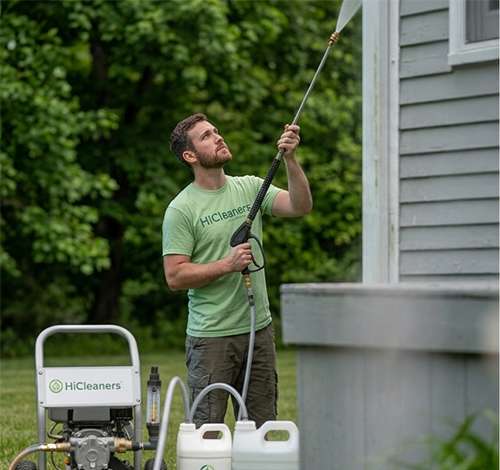
A soft wash every year or two – adjusted for your home's shade, tree cover, and moisture exposure – helps protect both the paint and the wood beneath it. For many homeowners, it's one of the most affordable ways to extend the life of an exterior paint job.
At HiCleaners, we clean painted wood siding using professional soft washing methods designed specifically for delicate painted surfaces. Every home is different. A shaded Colonial surrounded by mature trees won't need the same maintenance schedule as a sunny home with plenty of airflow. If you're not sure where your house falls, we're happy to take a look, give you an honest recommendation, and provide a free, no-obligation estimate.
Get a Free Estimate or call 781-333-8758. A good paint job is an investment. Keeping it clean with the right method is one of the simplest ways to protect it for years to come.
 Facebook
 LinkedIn
 Pinterest
 Twitter