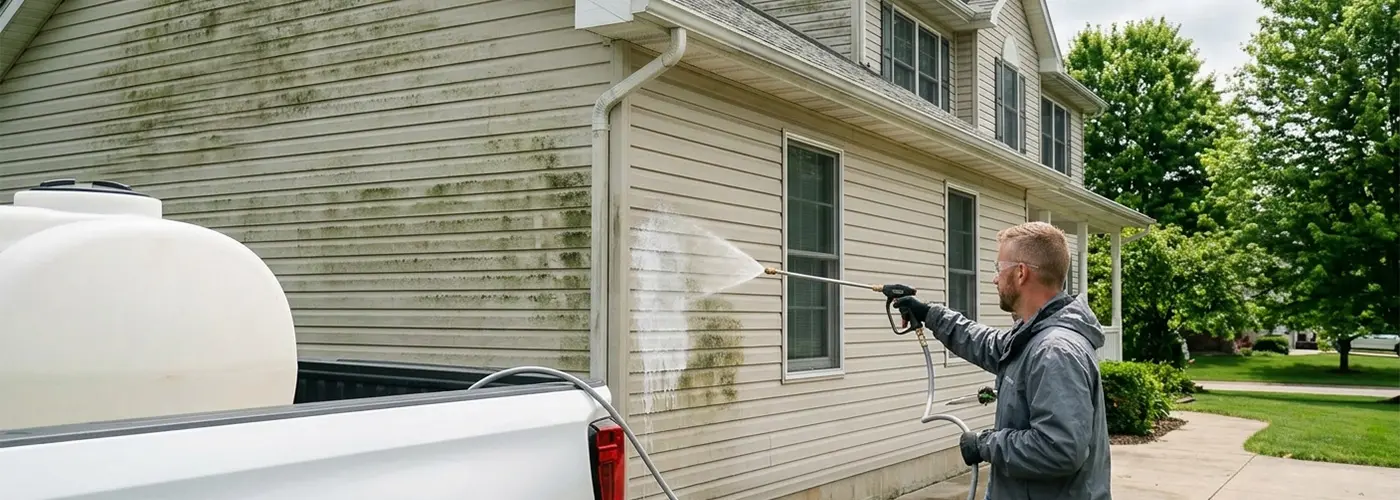
Professional exterior cleaning, particularly soft washing and exterior mold removal, helps eliminate these contaminants at the source and reduces their return.
Why do mold and algae thrive on Massachusetts homes?
Homes across Massachusetts face a unique combination of climate factors that support organic growth on exterior surfaces. Understanding these conditions explains why regular exterior cleaning is not optional, but preventative.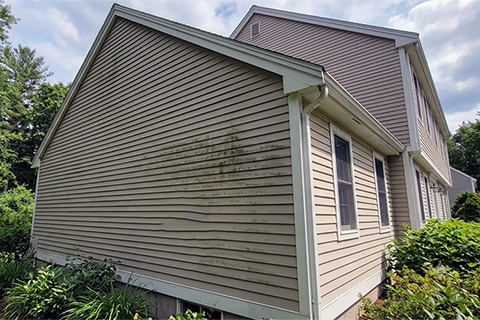
Several environmental elements contribute to mold and algae buildup:
- Humid summers
Massachusetts experiences warm, humid summers, especially from June through August. According to NOAA climate data, average summer humidity levels in the Northeast frequently exceed 70%, creating a moisture-rich environment ideal for mold growth. - Shaded north-facing surfaces
The north side of homes receives minimal direct sunlight. Without UV exposure to naturally dry and disinfect surfaces, moisture lingers longer. - Frequent rain and coastal influence
Many parts of Massachusetts experience consistent rainfall and coastal humidity, further extending damp conditions on siding, roofing, and trim. - Tree coverage and organic debris
Leaves, pollen, and debris trap moisture against exterior materials, feeding algae and mold colonies.
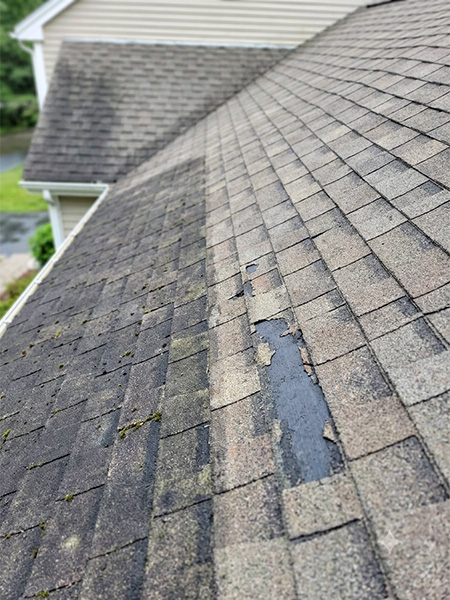
When these conditions combine, green-black streaks begin to form. On roofs, this is often caused by Gloeocapsa magma, a type of cyanobacterium commonly found in humid regions of the United States.
Left untreated, these organisms continue to reproduce and release spores into the surrounding air.
Are exterior mold spores a health concern?
Outdoor mold is a natural part of the environment. However, excessive mold growth near your home can increase localized spore concentrations.The U.S. Environmental Protection Agency (EPA) explains that mold produces allergens and irritants, and exposure may trigger symptoms in sensitive individuals, including nasal congestion, coughing, throat irritation, or wheezing [1]. People with allergies, asthma, or weakened immune systems may be more sensitive to mold exposure.
It is important not to overstate the risks. The presence of mold on exterior surfaces does not automatically mean there is mold inside the home. Still, spores released from siding, decks, and roofing can travel through the air and enter homes. This may happen when windows are open, when ventilation systems are running, through HVAC intake units, or simply through doors that are opened frequently during warmer months.
Reducing mold growth outside your home helps minimize the overall spore load in the immediate environment. This supports a healthier exterior space, especially for families who spend time outdoors or keep windows open during summer.
Why pressure washing alone is not enough
Many homeowners assume high-pressure washing solves the problem. In reality, traditional pressure washing often removes surface staining without eliminating the underlying biological growth.
Here is why that matters. High pressure can damage siding and shingles and even weaken wood fibers. It can also spread mold spores onto nearby surfaces rather than contain them. While it may remove visible stains, it often does not eliminate the underlying root systems. As a result, the growth frequently returns within just a few months.
Without targeting the organism at its source, the discoloration reappears quickly, especially in Massachusetts’ humid climate.
What is soft washing and why is it more effective?
Soft washing is a professional cleaning method that uses low-pressure water combined with specialized cleaning solutions designed to kill mold, mildew, algae, and bacteria at the root.Unlike pressure washing, soft washing prioritizes treatment over rinsing.
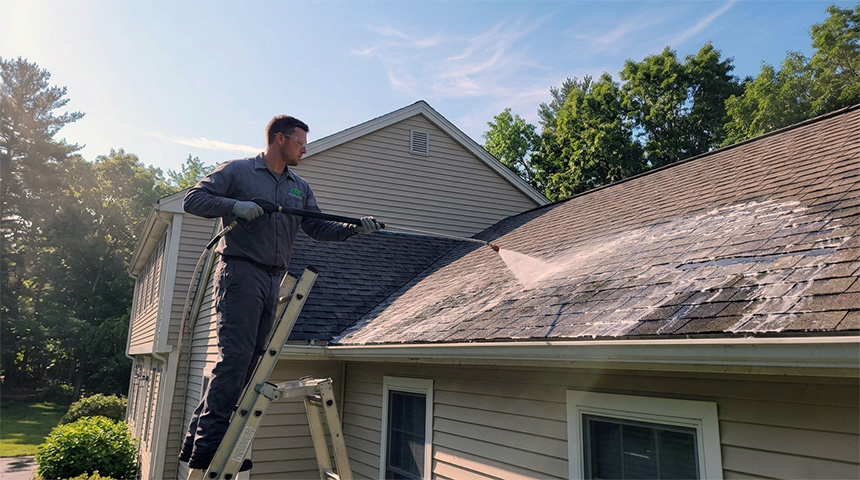
A proper soft washing process typically includes:
- application of biodegradable cleaning solutions – these solutions are formulated to break down organic growth and neutralize spores;
- dwell time for full penetration – the cleaning agents are allowed to remain on the surface long enough to eliminate root structures;
- low-pressure rinse – gentle rinsing removes debris without damaging shingles, vinyl siding, stucco, or painted surfaces;
- post-treatment protection – by eliminating spores at the source, soft washing slows regrowth compared to surface-only cleaning.
This approach not only improves appearance but also extends the life of exterior materials.
How exterior cleaning protects your home surfaces
Beyond health considerations, mold and algae can accelerate material deterioration.For example, Gloeocapsa magma feeds on the limestone filler in asphalt shingles, contributing to gradual roof degradation. Dark streaking also increases heat absorption, which may raise attic temperatures during summer months.
Professional exterior cleaning helps extend your roof's lifespan by removing damaging organic buildup. It also protects siding from stains and premature wear caused by mold and algae. By eliminating growth that traps moisture, it reduces the risk of water sitting against structural materials. At the same time, it improves curb appeal and supports overall property value. Over the long term, this preventative approach can also help lower repair and maintenance costs.
Seasonal inspection allows early intervention before buildup becomes extensive.
Signs your home may need professional exterior cleaning
Not all discoloration is immediately obvious. A careful exterior evaluation should look for:- Green or black streaks on the north side of the home
Especially under eaves and in shaded areas. - Dark roof staining
Often mistaken for dirt but typically caused by algae growth. - Powdery or fuzzy surface patches
Common on wood trim and decks. - Musty odor near siding or gutters
Persistent moisture can support hidden organic growth.
If you notice these signs, scheduling a professional assessment helps determine the appropriate cleaning approach.
Why seasonal exterior inspections matter in Massachusetts
New England weather varies significantly throughout the year, making seasonal inspections especially important. Spring and early summer are the best times to evaluate your home’s exterior. Snowmelt and heavy spring rains often leave surfaces damp for extended periods, and this is when mold and algae growth usually becomes more noticeable.A preventative maintenance plan typically includes annual soft washing of siding, roof inspections for algae streaking, gutter cleaning to prevent water buildup, and deck or fence cleaning when needed. It should also include checking areas that tend to retain moisture. Regular maintenance helps protect exterior surfaces and supports a cleaner, healthier environment around your home.
The long-term benefits for your family
Professional exterior cleaning offers two key advantages:First, it reduces visible mold, mildew, and algae at the source. This lowers the concentration of spores circulating immediately around your home.
Second, it protects the integrity of exterior materials. Roofing, siding, and trim last longer when organic growth is controlled early.
For Massachusetts homeowners dealing with humid summers and shaded surfaces, soft washing is not simply about appearance. It is a preventative measure that supports healthier outdoor living conditions and safeguards your property investment.
Scheduling a seasonal inspection allows small issues to be addressed before they spread. A cleaner exterior means a more protected home environment for your family year-round.
 Facebook
 LinkedIn
 Pinterest
 Twitter