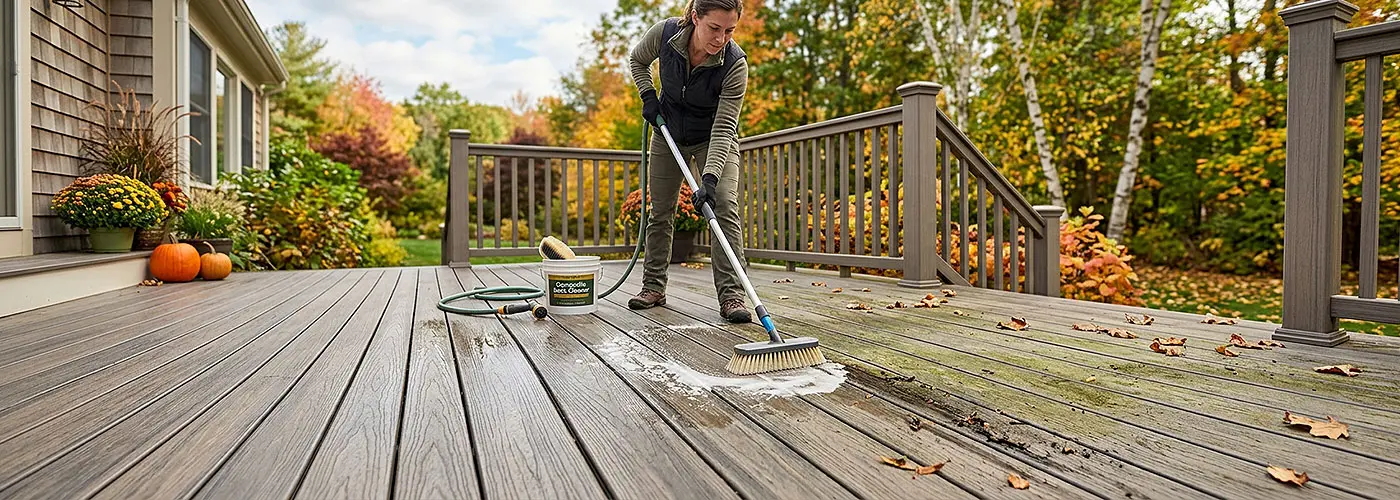
Unlike wood, composite decking doesn't rot, but its textured surface and the gaps between the boards naturally collect organic debris. In Massachusetts' humid climate, pollen, algae, mold, and tannins released by wet leaves can trap moisture and gradually leave the deck looking dull, stained, or discolored.
The good news is that composite decking is relatively easy to maintain – as long as it's cleaned using the right methods. Treating it like a traditional wood deck can damage the surface and, in some cases, even affect the manufacturer's warranty.
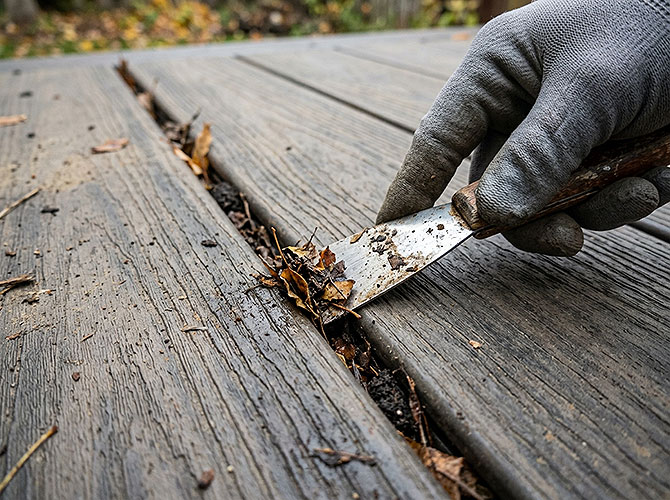
Start by clearing the gaps between the boards
Before applying any cleaner, remove leaves, dirt, and debris from the spaces between the deck boards.These narrow gaps are where moisture tends to collect first, creating ideal conditions for algae, mold, and mildew. Simply rinsing the surface won't remove the buildup trapped between the boards, so taking a few extra minutes to clear these areas makes the rest of the cleaning process much more effective.
Once the grooves are clear, sweep the entire deck and rinse it with a garden hose to remove loose dirt.
Clean the deck step by step
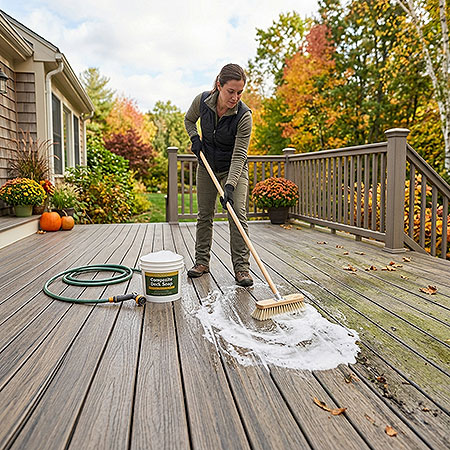
After preparing the surface, follow these steps for a thorough cleaning:- Apply a composite-safe deck cleaner
- Choose a cleaner specifically designed for composite decking rather than a general-purpose household cleaner.
- Allow the cleaner to sit
- Let it remain on the surface for the amount of time recommended by the manufacturer. This dwell time allows the solution to break down algae, mold, pollen, and organic buildup before scrubbing begins.
- Scrub gently with a soft-bristle brush
- Work in the direction of the deck boards rather than across them to avoid scratching the surface while lifting dirt and stains.
- Rinse thoroughly
- Wash away any remaining cleaner before it dries on the decking, leaving the surface clean and ready to air-dry.
Allowing the cleaner enough time to work is often more effective than applying extra pressure while scrubbing.
Common stains and how to handle them
Certain stains appear more frequently than others after a busy summer outdoors.Grease from the grill
Grease should be cleaned as soon as possible before it has time to soak into the surface. A composite-safe degreaser is usually the most effective solution for removing oily residue.Leaf and tannin stains
Wet leaves release natural tannins that can leave dark stains if they're left on the deck for days or weeks. Regularly removing leaves during the fall helps prevent these stains from becoming more difficult to remove.Algae and green film
Shaded decks often develop a green film caused by algae or mold. A quick rinse usually removes only surface dirt, while a composite-safe cleaner with sufficient dwell time breaks down the biological growth itself.Treating these problems early is usually much easier than removing stains that have been left in place for months.
Composite decking is not the same as wood
One of the biggest mistakes homeowners make is maintaining composite decking the same way they would a traditional wood deck.Composite decking should never be sanded, and it doesn't require wood stain or sealer. Sanding can damage the boards' protective outer layer, while products designed for natural wood may not be compatible with composite materials.
Following the manufacturer's recommended cleaning methods helps preserve both the deck's appearance and long-term performance.
Protect your warranty
Many composite decking manufacturers provide specific cleaning recommendations as part of their warranty guidelines.Using excessive pressure, abrasive brushes, or harsh chemicals can damage the protective surface and may void warranty coverage. If pressure washing is permitted, it's generally recommended to use low pressure, a wide-angle spray tip, and maintain enough distance to avoid damaging the decking.
Before using unfamiliar cleaning products or equipment, it's always worth reviewing the care instructions for your particular decking brand.
When professional cleaning makes sense
Routine maintenance is something many homeowners can handle themselves. However, heavily stained decks, widespread algae growth, or years of accumulated buildup often require more specialized cleaning methods.Professional deck cleaning uses equipment and composite-safe cleaning products designed to remove stubborn organic buildup without damaging the surface. Companies experienced with composite decking follow manufacturer-approved cleaning methods that help protect both the decking and its warranty while restoring its appearance.
At HiCleaners, cleaning composite deck surfaces means using the manufacturer-safe methods and cleaning solutions your warranty requires, without sanding, staining, or high-pressure shortcuts. Get a free professional deck-cleaning offer, or call 781-333-8758.
Keep your deck looking its best year after year
Composite decking offers the advantage of lower maintenance than traditional wood decking, but it still requires regular care.Removing debris between the boards, cleaning with products designed specifically for composite materials, and addressing stains before they become permanent all help extend the deck's life and appearance.
With consistent maintenance throughout the year, a composite deck can remain a clean, attractive outdoor living space season after season.

 Facebook
 LinkedIn
 Pinterest
 Twitter