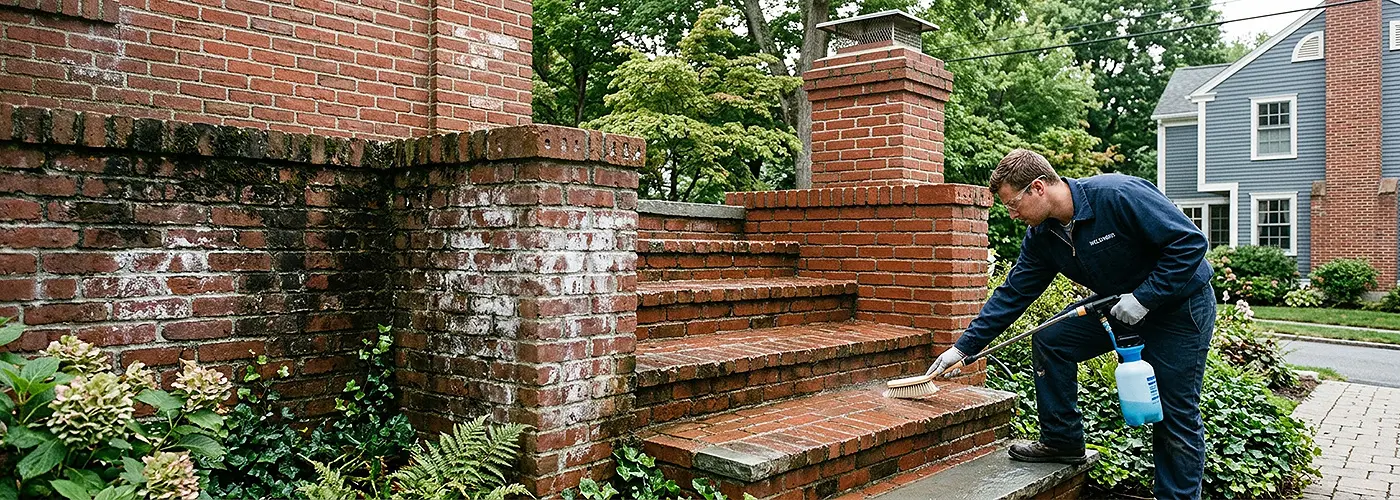
Here's how to do it properly on walls, steps, and chimneys, and why the tool that works great on your driveway is the wrong choice here.
Why pressure washing can damage brick
It's an easy mistake to make. Brick looks as durable as concrete, so it's natural to assume it can handle the same high-pressure treatment. But brick and mortar are more porous and softer than poured concrete.High-pressure water can strip the brick's surface and erode mortar from the joints, especially when the mortar is older or worn. It can also force water deep into the wall. In a freeze-thaw climate, that trapped moisture expands as it freezes and can gradually widen existing gaps.
Pressure washing at close range with a narrow nozzle can also leave light streaks. The concentrated force etches the surface unevenly, creating a patchy appearance that may be harder to correct than the original dirt.
Why Massachusetts brick gets these two specific problems
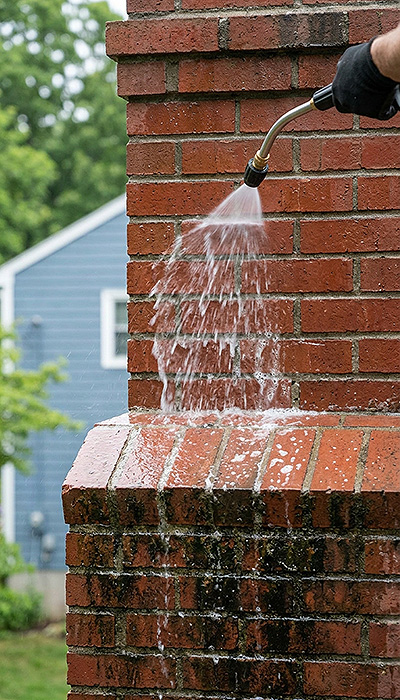
Two issues show up on brick here more than almost anywhere else, and they have different causes.Green or black biological growth develops because Massachusetts summers are humid enough, and brick holds moisture long enough, to support algae and moss, especially on shaded, north-facing walls, chimneys, and steps that don't get much direct sun.
Efflorescence, the white, powdery or crystalline staining that shows up on brick and mortar, is a completely different mechanism. It's not biological at all. Brick and mortar naturally contain small amounts of water-soluble salts. When moisture moves through the masonry, from rain, groundwater, or even condensation, it dissolves those salts. As the water evaporates from the surface, the salts get left behind as the white residue you see.
It looks like a cleaning problem, but it's really a moisture problem showing up on the surface.
Cleaning brick walls and steps: The right method, step by step
For the biological growth (algae, moss, general dark staining) on brick walls and steps, soft washing is the right approach, in this order:- Inspect the mortar joints
- Before any water or cleaning solution touches the brick, check the mortar carefully. Repoint crumbling, cracked, separated, or missing mortar before cleaning, not after. Even gentle cleaning can drive water into compromised joints and deeper into the structure. Get the mortar sound first, then clean.
- Pre-wet the surface and surrounding landscaping
- Saturating the brick before applying any cleaning solution keeps it from absorbing the solution too quickly and protects nearby plants from overspray.
- Apply a soft wash solution at low pressure
- A biodegradable cleaning solution, applied at garden-hose pressure rather than with a pressure washer, does the work. No narrow nozzle, no close-range blasting.
- Let the solution dwell
- Give it several minutes of contact time so it can break down the algae or mildew at the source, rather than just knocking loose what's on the surface.
- Scrub gently with a soft-bristle brush
- A stiff nylon brush is enough for stubborn spots. Skip metal bristles, which scratch the brick face and can leave behind rust stains of their own.
- Rinse from the top down
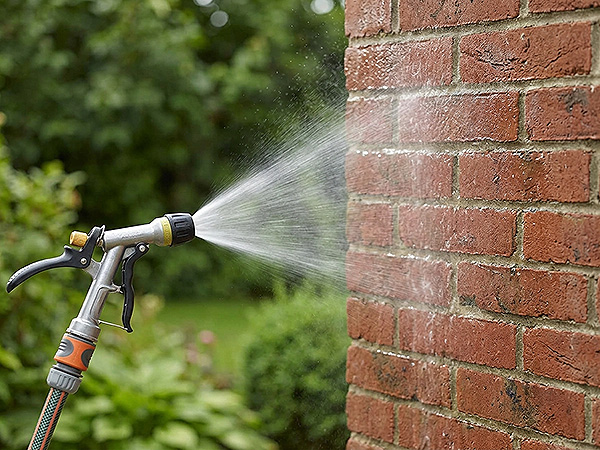
Working top to bottom keeps dirty runoff from re-depositing onto sections you've already cleaned, and uses low pressure the whole way through.
Steps get the same treatment, with extra attention to the tread edges, where moisture tends to sit longest and where biological growth usually shows up first.
Removing efflorescence: A different process for a different problem
Because efflorescence is a mineral deposit rather than a living organism, it needs a different approach from soft washing.Start by dry brushing the area with a stiff nylon brush to remove loose salt buildup. Pre-wet the brick with plain water, then apply a diluted white vinegar solution directly to the deposits. Let it sit for 10 to 15 minutes, scrub gently, and rinse thoroughly with clean water.
For light efflorescence, this is often enough. Heavier or recurring buildup may point to an ongoing moisture problem, such as a leaking gutter, poor drainage, or a missing cap. Cleaning removes the visible salts, but fixing the moisture source is what helps keep them from returning.
Chimneys: What's actually being cleaned
Chimney cleaning involves two very different jobs.The exterior brick can develop the same algae, moss, and efflorescence as other masonry, so the cleaning methods above apply here as well. Because chimneys are highly exposed to wind and rain, they may need more frequent attention.
The inside of the flue is different. Creosote buildup from wood burning is a fire hazard and should be handled by a certified chimney sweep. Exterior soot or staining is a cleaning issue, but buildup inside the flue requires professional chimney service.
Everything above comes back to the same principle: brick and mortar need the cleaning to do the work, not the pressure.
If you're not sure whether your mortar is in good enough shape to clean, or you're dealing with efflorescence that keeps coming back no matter what you try, we're happy to take a look. At HiCleaners, we offer a free assessment of the brickwork's condition before any cleaning begins, so you know exactly what you are dealing with.
Request a free brick assessment or call 781-333-8758.
Frequently Asked Questions
Should you test a brick cleaner before using it on the whole surface?
Yes. Always test the cleaner on a small, inconspicuous area first and let it dry completely. This helps reveal discoloration, surface changes, or an uneven result before you treat the entire surface.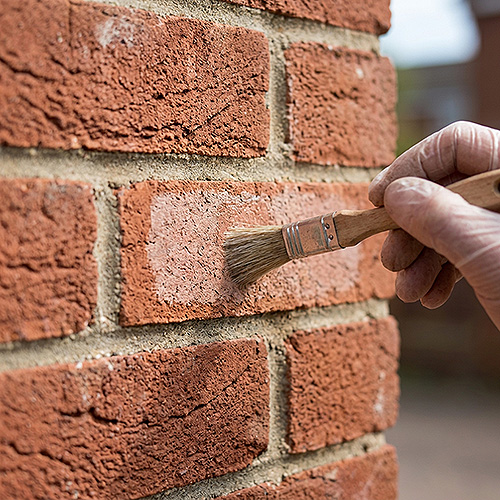
 Facebook
 LinkedIn
 Pinterest
 Twitter