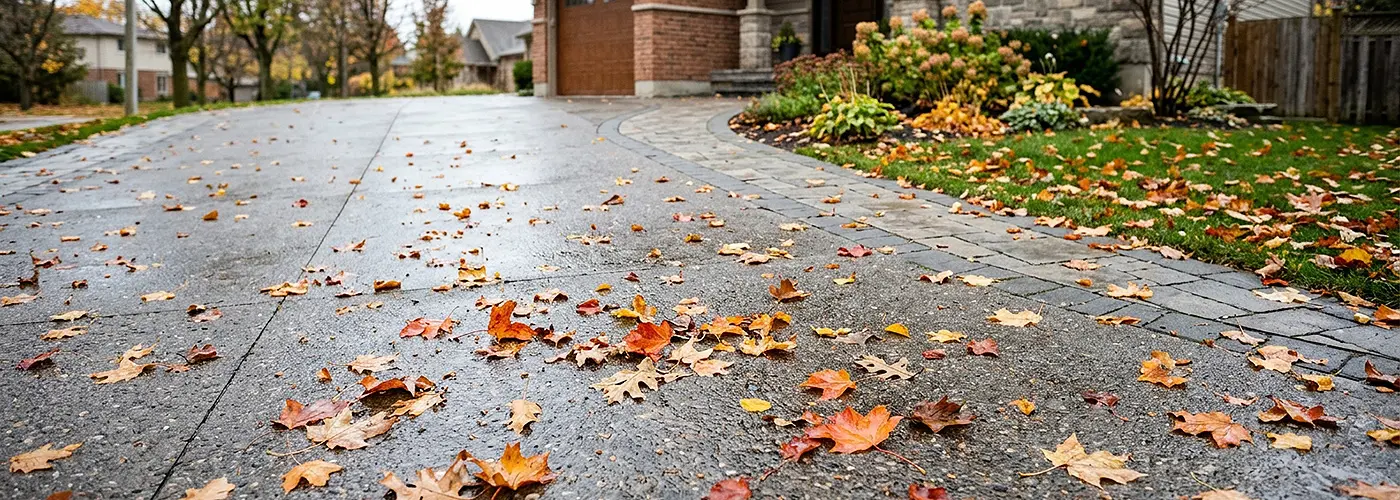
Here is what causes them, how to prevent them, and what to do about the ones that are already there.
What causes leaf stains on concrete
Leaves contain tannins, natural compounds that dissolve in water. When leaves lie on a wet surface, tannins leach out and soak into concrete pores. The longer the leaves lie there, the deeper the stain goes.Oak and maple leaves, which are common across Massachusetts, are among the usual causes. Wet weather speeds the process up, which is why a rainy fall can leave a driveway looking blotchy in a matter of days.
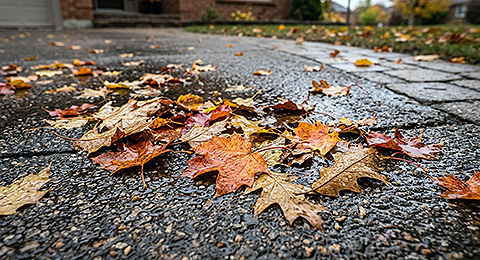
Prevention comes first
To prevent leaf stains, a few habits do most of the work, and they are much easier than removing a stain later:- sweep or blow leaves off the driveway and walkways regularly, and especially after rain, since wet leaves release tannins faster;
- keep the gutters above the driveway clean, because clogged gutters can spill leaf debris and water onto the same stretch of concrete again and again;
- pay attention to corners, edges, and textured areas where leaves collect and stay wet;
- consider concrete sealing before leaf fall begins. A penetrating sealer fills the pores so tannins are less likely to soak in, and stains are easier to clean. Some guides suggest resealing every two to three years.
Sealing works best on clean, dry concrete, and it is a separate job from cleaning, so ask a concrete or paver contractor about it. The key point is timing: the sealer needs to be on before the leaves come down, not after.
Removing fresh stains
Fall driveway cleaning is easiest when stains are new. To remove leaf stains from concrete while they are fresh:- Wet the surface with water.
- Apply a mild detergent or an oxygen-based cleaner made for concrete, and follow the label.
- Scrub with a stiff-bristled brush, working into the pores.
- Rinse thoroughly with clean water.
Test any cleaner on a small, hidden area first, protect nearby plants, and avoid strong acids, which can corrode the concrete surface. Pressure alone often lifts loose debris but may not remove a stain that has already soaked in, and on pavers it can wash the sand out of the joints.
When to call a professional
If stains cover a large part of a driveway or walkway, or if they have been there for a season or more, a professional wash is usually the better route. Older stains may lighten without disappearing completely, and we will not promise otherwise. Our concrete cleaning page explains how we approach stained concrete, and our pressure washing page covers other hard surfaces such as pavers. If the surface also has algae from damp leaf litter, exterior mold removal addresses that growth.Cleaning works best while daytime temperatures stay above about 40°F and the surface has time to dry. Once nights are consistently below freezing, it is better to wait until spring.
If you would like your driveway and walkways cleaned before winter, we are here to help. At HiCleaners, we offer a free assessment and fall washing for driveways and walkways. Request a free estimate or call 781-333-8758.
 Facebook
 LinkedIn
 Pinterest
 Twitter