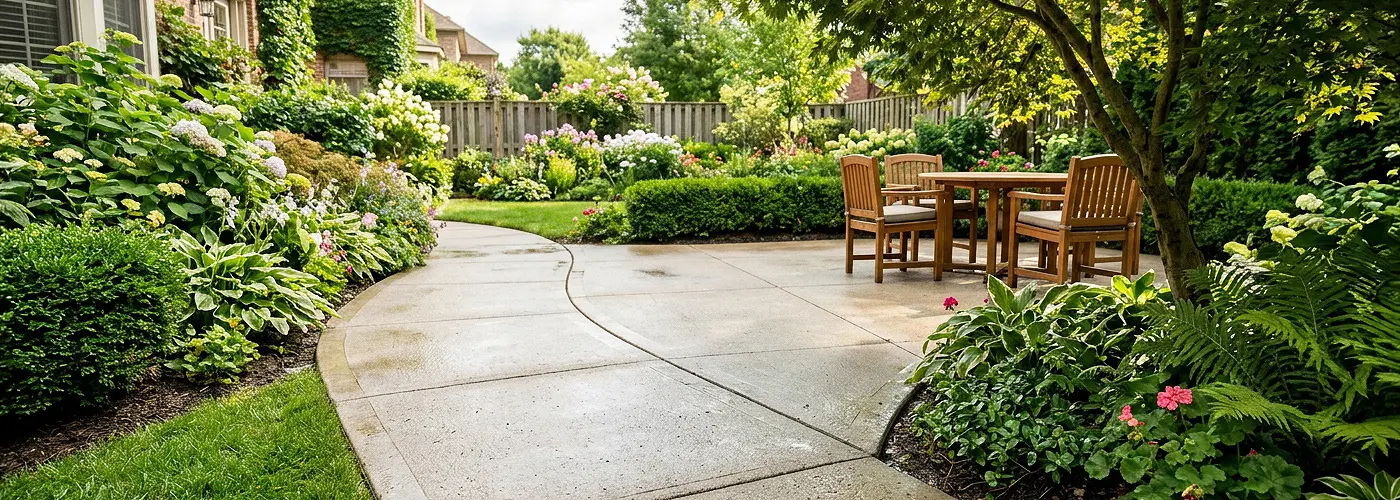
Here is why moss takes hold, how to clean moss off a walkway or patio step by step, and how to keep it from coming back.
Why moss grows on concrete
Moss needs shade, moisture, and a surface it can hold on to. Concrete is porous, so it soaks up and holds water, and poor drainage keeps the same spots damp. Add Massachusetts' humid climate, and moss can grow on shaded concrete almost year-round.Once it is established, moss acts like a sponge, keeping the surface wet long after the rest of the yard has dried. Water in concrete's pores expands by roughly 9 percent when it freezes, so a surface that stays wet through winter is more likely to roughen and crack over time. The same applies to moss on pavers, where the growth can work into the joints.
How to clean moss off a walkway or patio, step by step
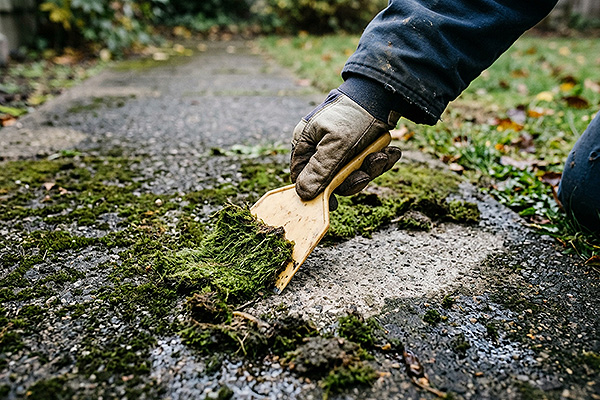
A sequence works better than a single product. In this order:- Scrape and sweep while it is dry
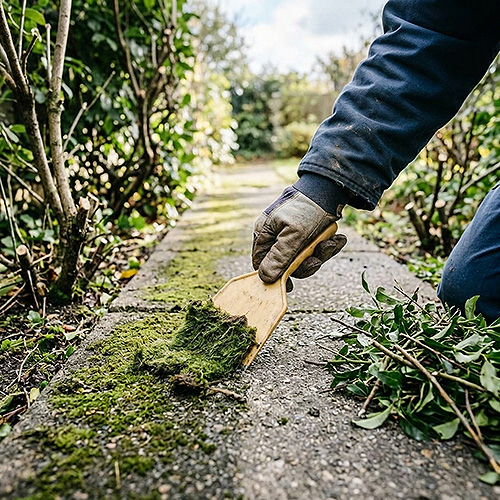
- Lift thick growth with a plastic scraper or a stiff synthetic brush, then sweep it away. Skip wire brushes, which can leave metal particles behind that rust and stain.
- Apply a moss treatment
- Use a product made for hard surfaces and follow the label. Protect the grass and plants along the edge, and test a small area first.
- Let it dwell
- Give it the contact time the label calls for so the treatment can work, not just wet the surface.
- Scrub the dead moss loose
- A stiff-bristled brush lifts it from the surface and out of small cracks.
- Rinse thoroughly
- Wash away loosened moss and any leftover product with plenty of water.
Please avoid strong acids on concrete, which can corrode the surface. Wet moss is also very slippery, so wear shoes with good grip and take extra care on steps and slopes while you work.
Pressure washing concrete: match the pressure to the surface
Pressure washing concrete can remove loosened moss quickly, but the surface matters:- on sound concrete, use a wide-fan tip, hold it back from the surface, and keep it moving, since a narrow tip held close can etch the concrete and make it more porous;
- on decorative, stamped, or older concrete, test first and use lower pressure;
- on pavers, go carefully, because pressure can wash out the sand between the joints, and you have to refill that sand afterward so the pavers stay locked in place.
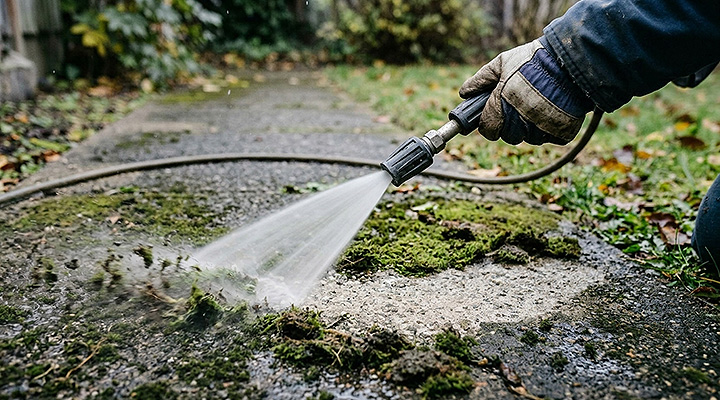
For larger areas, or where you are not sure how a surface will react, our pressure washing crews match the pressure to the material, and our concrete cleaning page explains how we approach stained and weathered concrete.
How to prevent moss on concrete
Removing moss treats the growth, not the conditions behind it. If shade and moisture remain, it can return within a few months. These changes help:- let in more light by trimming back branches and shrubs;
- improve drainage, including keeping gutters and downspouts clear so overflow does not soak the same area;
- trim vegetation that crowds the edges of walkways and patios;
- sweep regularly so leaves and dirt do not build up in the pores;
- consider sealing the concrete once it is clean and dry, which can reduce how much water it absorbs. Sealing is a separate job from cleaning, so ask a concrete or paver contractor about it.
Algae often appears before moss does, and treating it early with exterior mold removal can keep it from taking hold.
Timing it before winter
Moss removal works best while the surface can dry afterward. A rough guide is daytime temperatures above about 40°F with a mild stretch before overnight freezes. Once nights are consistently below freezing, it is better to wait until spring.If you would rather leave it to someone else, we are here to help. At HiCleaners, we offer a free assessment and cleaning for walkways and patios, and we can recommend the right method for your surface. Request a free estimate or call 781-333-8758.
 Facebook
 LinkedIn
 Pinterest
 Twitter