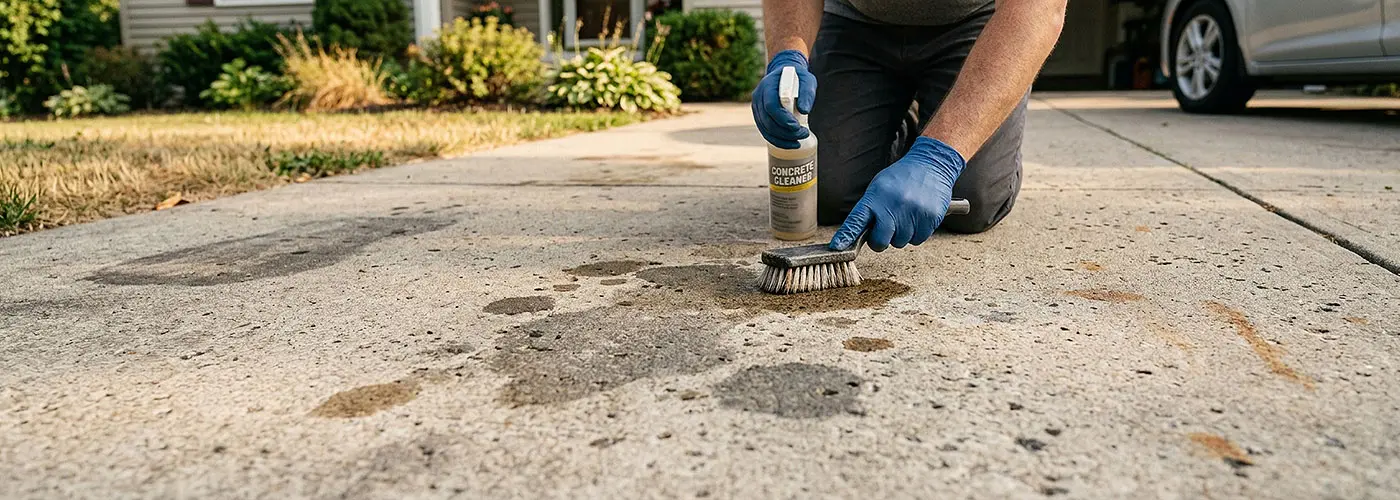
The good news is that many stains can be significantly reduced – or even removed completely – with the right cleaning method. The key is choosing an approach based on how long the oil has been sitting on the driveway.
The best way to remove oil stains depends on their age
Not every oil stain requires the same treatment. Fresh spills are much easier to clean than stains that have had weeks or months to penetrate the concrete.Fresh spills
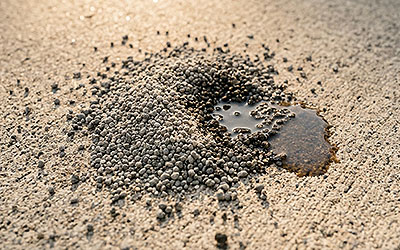
If the spill is only a few hours old, start by covering it with an absorbent material such as clay-based cat litter or diatomaceous earth. Leave it in place for several hours to absorb as much oil as possible before sweeping it away.Afterward, apply a concrete-safe degreaser, scrub the area with a stiff-bristle brush, and rinse thoroughly with water.
Recent stains
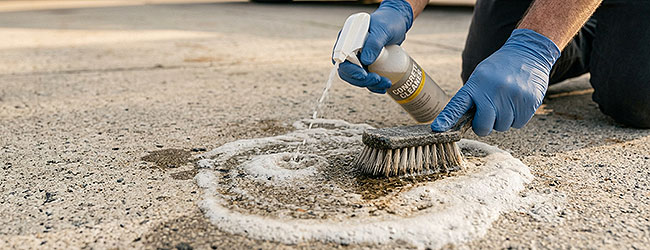
Oil stains that have been sitting for several days or weeks usually require a stronger approach. Apply a degreaser designed for concrete, then allow it to sit for the time recommended by the manufacturer before scrubbing.Giving the cleaner enough time to break down the oil is often more important than aggressive scrubbing alone.
Older, set-in stains
Once oil has penetrated deep into the concrete over several months, household cleaners may no longer be enough.Professional hot-water pressure washing, combined with commercial-grade degreasers, is often much more effective at lifting embedded grease from concrete pores than cold water or standard DIY cleaning products.
Common mistakes that can make stains worse
When trying to remove oil stains, some common cleaning methods can actually make the problem more difficult to fix:- Using household bleach
Bleach disinfects surfaces but does very little to break down petroleum-based oils. It may lighten the appearance of concrete without removing the stain itself. - Using gasoline or paint thinner
Harsh solvents can create safety hazards, release harmful fumes, and allow contaminated runoff to enter nearby soil or storm drains. They're generally not recommended for cleaning driveways. - Using too much pressure
Many homeowners assume that maximum pressure will remove stubborn stains. In reality, concentrating a narrow spray on one spot often pushes the oil farther into the surrounding concrete, creating a larger, lighter stain instead of removing it.
Using the right cleaning products and techniques typically yields better results than relying solely on excessive pressure.
What results should you expect?
Fresh oil stains often respond very well to prompt treatment and may disappear almost completely.Older stains are different. Once oil has remained in concrete for an extended period, complete removal isn't always possible. In many cases, the goal becomes significantly reducing the stain's appearance rather than eliminating it entirely.
Patience is also important. Some stubborn stains improve gradually over multiple cleaning treatments rather than disappearing after a single application.
Should you seal the driveway afterward?
Once the stain has been cleaned as much as possible, applying a quality concrete sealer can help protect the driveway from future spills.While sealers won't make concrete stain-proof, they reduce how deeply oil can penetrate the surface. As a result, future spills are usually much easier to clean before permanent staining occurs.
When professional cleaning makes sense
Fresh stains are often good candidates for DIY cleaning using absorbent materials and a quality concrete degreaser.For older, deeply embedded stains, professional pressure washing equipment – particularly systems that use hot water – can often deliver noticeably better results than consumer-grade equipment. Professionals can also determine whether additional treatments are likely to improve the stain or whether it has become permanent.
Protecting your driveway for the long term
Oil stains don't just affect the appearance of a driveway. Left untreated, they can become increasingly difficult to remove as they penetrate deeper into the concrete over time.Cleaning spills as soon as possible, using the right products, and sealing the driveway periodically can help keep concrete looking cleaner for longer. Whether you tackle the job yourself or hire a professional, addressing oil stains early is usually the simplest and most cost-effective approach.
At HiCleaners, we treat driveways based on the stain's actual age and severity rather than a one-size-fits-all approach, using hot-water pressure washing and professional-grade degreasers where household products won't cut it. Get a free estimate for stubborn stains or call 781-333-8758.
 Facebook
 LinkedIn
 Pinterest
 Twitter