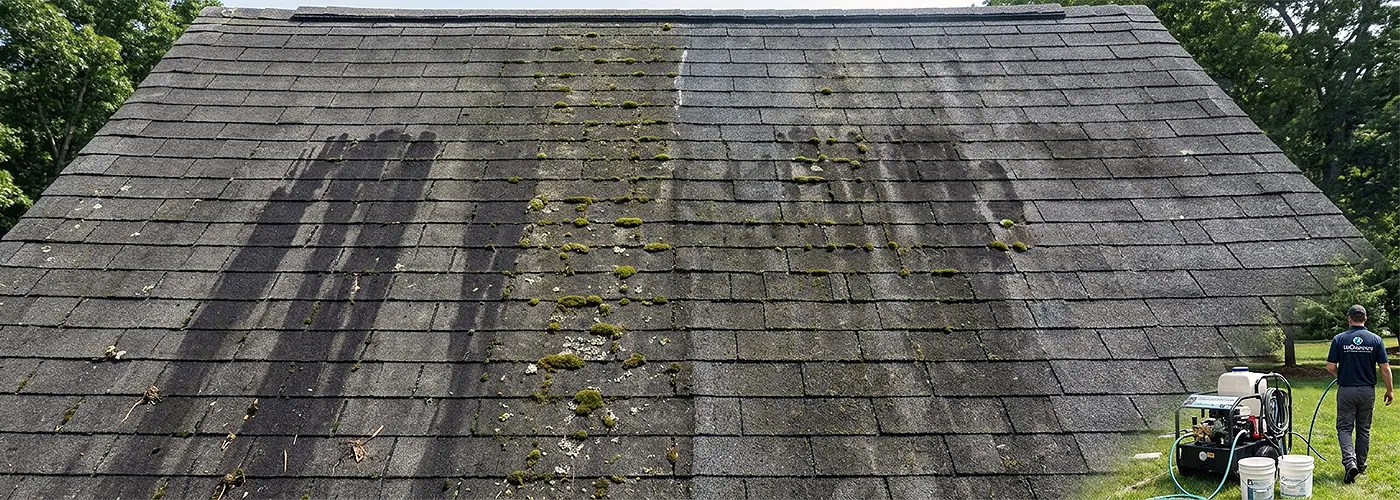
The good news is that black streaks usually don't mean you need a new roof. The bad news is they won't disappear on their own, and using the wrong cleaning method can do far more damage than the algae itself.
Here's what's really causing those stains, why they matter, and the safest way to remove them without shortening your roof's lifespan.
What those black streaks really are
Despite the way they look, those black streaks aren't dirt, soot, or asphalt washing off your shingles. They're caused by Gloeocapsa magma, a type of blue-green algae that thrives in warm, humid climates like ours here in Massachusetts.This algae spreads through airborne spores, which is why entire neighborhoods often start developing the same dark streaks around the same time. If you've noticed similar stains on your neighbor's roof, that's probably not a coincidence.
Once the spores land on your shingles, they begin feeding on the limestone filler used by manufacturers in many asphalt shingles. As the colony grows, it develops a dark outer coating that protects it from sunlight. That's the black staining you see from the ground.
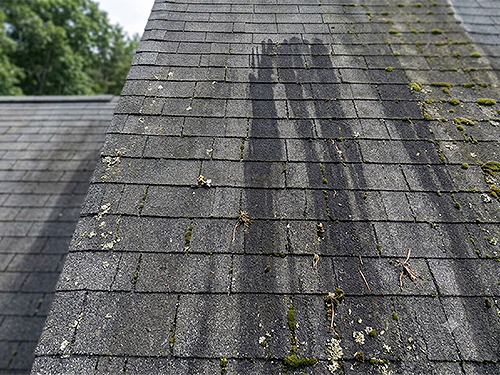
Unfortunately, rain won't wash it away. Once the algae becomes established, it continues spreading until it's treated.
Massachusetts provides almost perfect conditions for it to grow. Long periods of humidity, frequent summer rain, shaded roof sections, and damp mornings all create an environment where algae can thrive. North-facing roof slopes and homes surrounded by mature trees are especially vulnerable because those areas stay wet much longer after rain.
Why black streaks are more than just a cosmetic problem
Many homeowners put roof cleaning at the bottom of their to-do list because the stains seem like nothing more than an appearance issue. That's understandable, but it's also one of the biggest misconceptions we see.The algae isn't simply sitting on the surface. Over time, it feeds on materials within the shingles and gradually wears away the protective granules that help shield your roof from the elements.
As those granules disappear, several problems begin to develop.
Less protection from UV exposure
The mineral granules covering asphalt shingles are there for a reason. They reflect sunlight and protect the asphalt underneath from breaking down.As algae gradually damages that protective surface, your shingles become more vulnerable to sun exposure, causing them to age faster than they should.
Higher roof temperatures
Dark algae stains absorb considerably more heat than clean shingles.During a hot Massachusetts summer, the extra heat can raise attic temperatures, forcing your air conditioning system to work harder and increasing cooling costs.
More moisture stays on the roof
Algae traps moisture against the surface of the shingles.Instead of drying quickly after rain or morning dew, affected areas often stay damp for much longer. Those conditions also make it easier for moss and lichen to become established, creating an even bigger maintenance problem down the road.
A shorter roof lifespan
Most asphalt shingle roofs are designed to last decades when they're properly maintained.When algae is allowed to spread unchecked year after year, deterioration accelerates. That doesn't necessarily mean the roof will fail overnight, but it can significantly shorten the lifespan of an otherwise healthy roofing system.
That's why removing black streaks isn't just about improving curb appeal. It's one of the simplest ways to help protect one of your home's biggest investments.
The two cleaning methods homeowners usually consider
Once homeowners realize the stains aren't going away on their own, they usually start looking for ways to clean their roof.In our experience, almost every conversation comes down to two options. One is safe for asphalt shingles. The other can permanently damage the roof.
Unfortunately, many people choose the wrong one because it seems like the faster solution.
Why pressure washing is one of the worst things you can do
It's easy to understand why pressure washing seems like a good idea. High-pressure water removes dirt from siding, driveways, decks, and concrete, so many homeowners assume it should work just as well on a roof.It doesn't. In fact, pressure washing is one of the quickest ways to shorten the life of asphalt shingles.
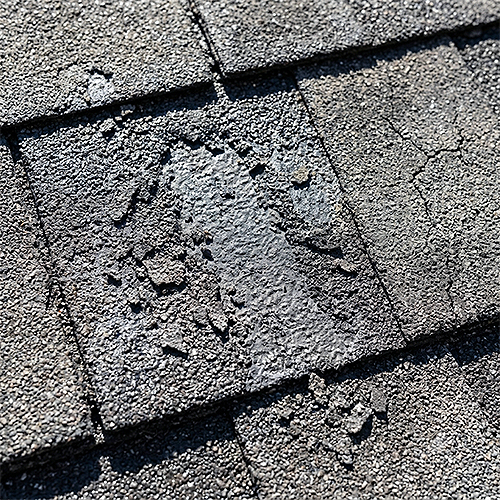
The force of the water strips away the protective granules that your shingles rely on to withstand years of sun, rain, snow, and ice. Once those granules are gone, they can't be put back.
High-pressure water can also force moisture beneath the shingles and into the roof deck, where it can contribute to moisture-related problems that aren't immediately visible.
There's another issue many homeowners don't realize until it's too late. Most major asphalt shingle manufacturers specifically advise against pressure washing because it can void warranty coverage.
A freshly pressure-washed roof may look cleaner for a while, but that short-term improvement often comes at the expense of years of remaining roof life.
Why climbing up there yourself isn't worth the risk
Even if you avoid using a pressure washer, cleaning a roof yourself still isn't something we'd recommend.Asphalt shingles can become surprisingly slippery, even when they look only slightly damp. Add a cleaning solution, morning dew, or a little moss, and the footing gets even more unpredictable.
Every year, homeowners are seriously injured while trying to handle roof maintenance that seemed simple enough from the ground. Carrying a pump sprayer, managing a hose, or trying to scrub shingles while standing on a pitched roof creates risks that simply aren't worth taking.
We've talked to plenty of homeowners who planned to spend a Saturday cleaning their roof themselves. Most changed their minds once they were standing on the ladder looking up.
The safest roof cleaning method isn't about finding better equipment. It's about keeping your feet on the ground and letting trained professionals handle the work.
The right way to remove black streaks: Soft washing
If pressure washing is the wrong approach, what actually works?The answer is soft washing, which is also the cleaning method recommended by the Asphalt Roofing Manufacturers Association (ARMA).
Unlike pressure washing, soft washing doesn't rely on force to remove stains. Instead, it eliminates the algae at its source while protecting the shingles themselves.
Here's what a professional soft wash typically involves.
Low-pressure application
The cleaning solution is applied using equipment that operates at little more than garden hose pressure.That means there's no risk of blasting away granules or forcing water beneath the shingles.
The goal isn't pressure. The goal is letting the cleaning solution do the work.
A cleaning solution that kills the algae
Professional roof cleaning uses a sodium hypochlorite-based solution that's specifically designed to kill biological growth, including algae, moss, and lichen.Rather than trying to wash the stains away with force, the solution attacks the algae itself.
Once the organism is dead, it stops spreading and gradually releases its grip on the roof.
Time does the heavy lifting
One of the biggest differences between pressure washing and soft washing is patience.After the solution is applied, it's left on the shingles long enough to break down the algae.
There's no aggressive scrubbing. No high-pressure blasting. No grinding away at the shingles' surface.
The cleaning happens through chemistry, not force.
Protecting your landscaping
A reputable roof cleaning company doesn't just focus on the roof.Before any cleaning begins, nearby landscaping is thoroughly watered to help protect plants from the cleaning solution. After the roof has been treated, everything surrounding the home is rinsed again to dilute and remove any remaining residue.
It's one of those details homeowners often don't think about until they see experienced crews taking the time to do it properly.
Don't expect an instantly perfect roof
One thing surprises many homeowners after a soft wash.The roof doesn't always look spotless the minute the crew packs up and leaves.
That's completely normal.
The cleaning solution kills the algae during treatment, but the dead organic material continues to break down over the days and weeks that follow. Rain naturally rinses away what's left behind, gradually restoring the roof's appearance.
Some roofs brighten noticeably within a few days.
Others continue improving over several weeks.
How quickly that happens depends on factors such as the extent of algal growth, recent weather, shade, and the amount of rainfall that follows the treatment.
If anything, that gradual improvement is actually a sign that the process worked as it was supposed to.
How long does a soft wash last?
This is one of the questions we hear most often. The honest answer is that every roof is different.On most Massachusetts homes, professional soft washing keeps black streaks under control for three to five years before another treatment becomes necessary.
Homes surrounded by mature trees or those with heavily shaded roof sections may see algae return sooner because those surfaces stay damp longer.
Homes with better sun exposure and good airflow often stay clean for several years.
No roof stays algae-free forever, but regular maintenance is much easier – and less expensive – than waiting until heavy staining takes over again.
How to slow down future algae growth
There's no permanent way to stop airborne algae spores from landing on your roof.There are, however, several ways to make your roof a much less inviting place for them to grow.
A few simple maintenance habits can make a noticeable difference over time.
- Trim tree branches that hang over the roof whenever possible. More sunlight and better airflow help shingles dry faster after rain.
- Keep your gutters clean. Proper drainage reduces standing moisture around the lower edges of the roof.
- Ask about zinc or copper strips. Installed near the roof ridge, these metals release small amounts of ions whenever it rains, helping discourage algae growth across the roof surface.
- Don't wait until the stains become severe. Periodic maintenance cleaning is easier on the roof and usually less expensive than dealing with years of heavy buildup.
None of these steps will eliminate algae completely, but together they can significantly slow its return.
When it's time to call a professional
If black streaks have started spreading across your roof, waiting usually won't improve the situation.Neither will a rented pressure washer.
Professional soft washing removes algae without damaging your shingles, protects your manufacturer's warranty, and eliminates the safety risks of climbing a steep roof.
At HiCleaners, we've helped thousands of Massachusetts homeowners safely restore their roofs using soft-washing methods recommended by the roofing industry. Every roof is a little different, so we start with a thorough inspection before recommending the right approach.
If you're wondering whether those black streaks are simply cosmetic or the beginning of a larger maintenance issue, we're happy to take a look.
Request your free roof assessment today or call us at 781-333-8758.
Your roof protects everything underneath it. Taking care of it with the right cleaning method today can help you avoid unnecessary repairs and extend its life for years to come.
 Facebook
 LinkedIn
 Pinterest
 Twitter