Here's the short answer, and the longer explanation of what actually varies between the options once you get past the naming.
Brand name vs. product category
"LeafGuard" is a specific, trademarked brand name for a particular product: a one-piece gutter system where the cover is built into the gutter itself as a single continuous piece, rather than installed as a separate cover on top of an existing gutter. It's one company's specific design."Leaf guard" and "gutter guard," written as two lowercase words, are generic terms. In everyday use, contractors and homeowners use them interchangeably to mean any cover, screen, or insert designed to keep debris out of a gutter, regardless of who made it or how it's built. When someone says their neighbor "got leaf guards installed," they're almost always talking about gutter protection in general, not necessarily the specific branded product.
That distinction matters most when you're comparing quotes. Two contractors using the phrase "leaf guard" might be describing completely different products, so it's worth asking what kind of system they're proposing rather than assuming the name tells you.
The main types of gutter guards
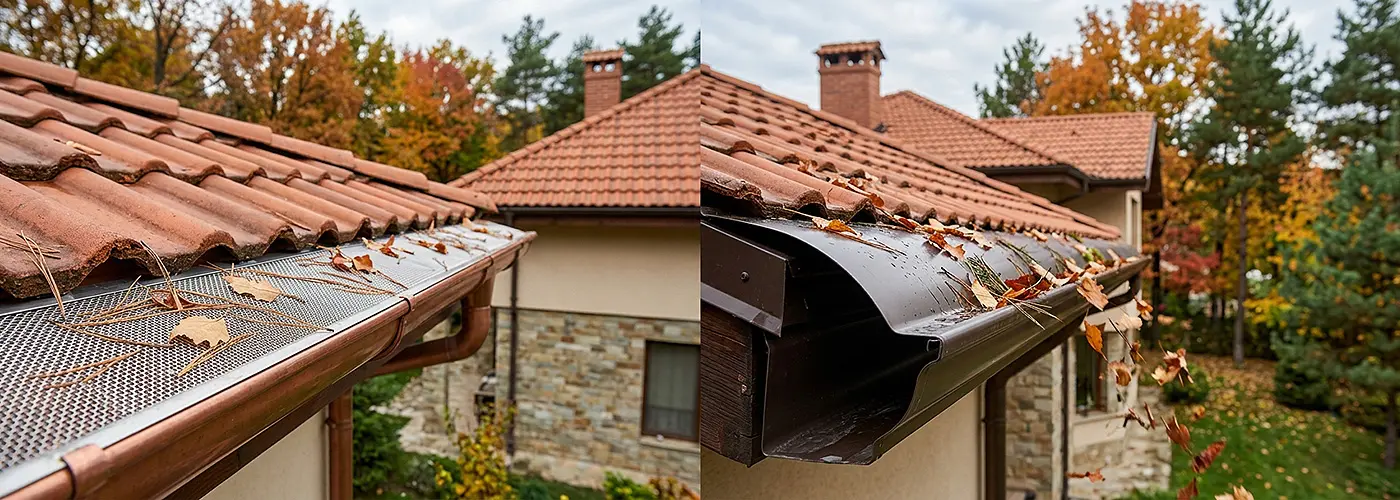
Once you set the brand name aside, gutter protection generally falls into a handful of categories, and they don't all block the same things.- Screen or mesh guards
A perforated metal or coarse mesh lid sits over the gutter opening. This is generally the simplest and least expensive category, and it blocks larger leaves reasonably well, but the holes are typically large enough that pine needles, seeds, and smaller debris still get through. - Micro-mesh guards
A much finer stainless steel or aluminum mesh, with openings small enough to block fine debris like pine needles, oak pollen clusters, and roofing granules, not just full leaves. This category generally offers the most complete debris rejection of the common types, at a higher cost than basic screens. - Reverse-curve or surface-tension guards
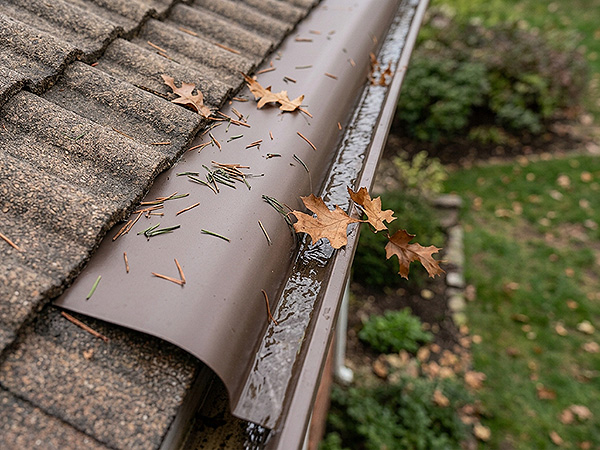
These use a curved solid surface that directs water around a bend and into the gutter through a narrow slot, while leaves and debris are meant to slide off the curve and fall to the ground. They tend to handle large leaves well but can struggle with pine needles, small seed pods, and very heavy rainfall, where water can overshoot the opening instead of following the curve. - Foam or brush inserts
A porous foam strip or bristled insert sits inside the gutter channel, letting water pass through while blocking larger debris on top. These are typically the least expensive option to buy, but debris that lands on top of the insert still needs to be brushed or blown off periodically, and organic material that settles into the material itself can be harder to clear out completely.
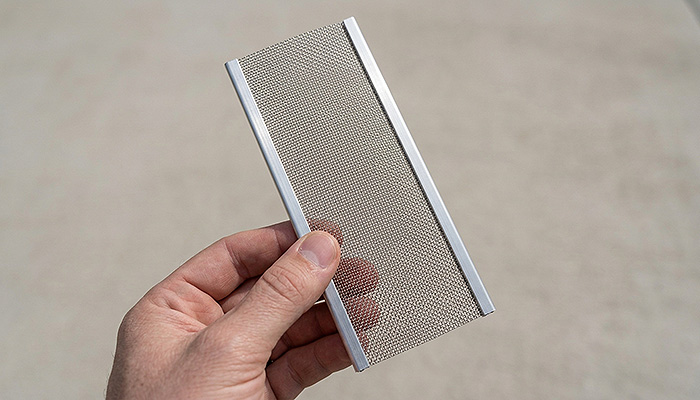
None of these categories is a single product from a single company. Most brands on the market build their own version of one of these designs, which is part of why two "gutter guard" quotes can describe fairly different things depending on which category each one uses.
Do gutter guards work? Yes, but not the way most people expect
Every category above reduces how much debris ends up in your gutters, but none eliminates maintenance entirely.Pine needles, pollen, small seeds, and other fine debris can still get past some guard types or collect on top of them. Over time, some of that material may also settle inside the gutter. It's far less than an uncovered gutter would collect, but it's rarely zero.
What changes with a guard is the frequency and type of maintenance:
- guards need periodic inspection to make sure they haven't shifted or been damaged by ice, wind, or falling branches;
- debris sitting on top of a screen, mesh, or curve may need to be cleared, especially after heavy pollen or leaf drop;
- fine sediment can still build up beneath the guard over time and may go unnoticed without an inspection.
Homes surrounded by pines or trees that produce a lot of fine seasonal debris may need more attention than those with mostly large-leaf deciduous trees. This is because smaller debris is more likely to collect on or pass through certain guard designs.
What this means for maintenance going forward
If you already have some kind of gutter protection installed, or you're deciding whether to add it, the practical takeaway is the same either way: a guard changes how often you need to check your gutters, not whether you need to check them at all. Most homes with guards installed do well with an occasional inspection rather than a full clean-out every season, but "occasional" still means checking, not skipping it indefinitely.If you're not sure what type of guard is on your gutters, whether it's doing its job, or whether your tree coverage matches what's installed, it's worth finding out before debris builds up somewhere you can't see it. We're glad to take a look.
Request a free gutter inspection or call 781-333-8758. We'll check what's currently protecting your gutters, let you know honestly whether it's doing what it's supposed to, and recommend next steps based on what we actually find, not on which product happens to be easiest to sell.
 Facebook
 LinkedIn
 Pinterest
 Twitter