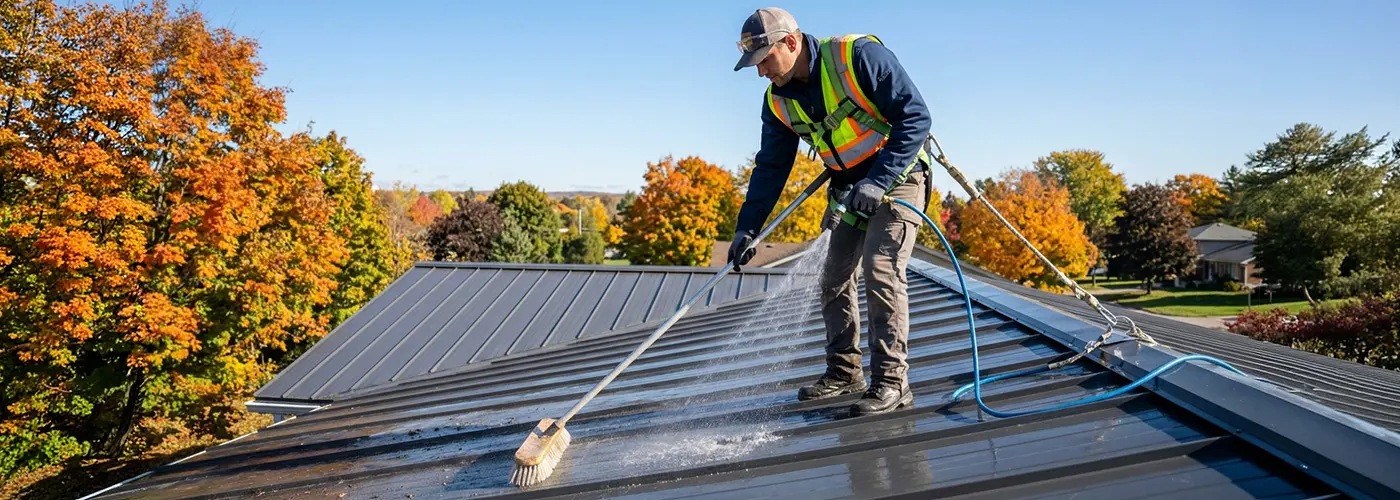
Fall is the right time to deal with it, because whatever sits on the panels now will stay there through the winter. Here is why metal needs a gentler approach, how to clean a metal roof safely, and when to leave it to a professional.
Why the finish is easy to damage
The protective coating on a metal roof is thin. It keeps moisture away from the metal underneath, so anything that wears it down opens the door to rust. High-pressure, abrasive brushes, and aggressive chemicals are the usual culprits.Debris causes the other half of the problem. Leaves and dirt that pile up in valleys, along overlaps, and around screws hold moisture against the metal, and in winter that moisture stays put. Left through a season of freezing and thawing, trapped dampness is exactly what a thin coating does not need, and keeping gutters clear helps meltwater drain away from the roof edge.
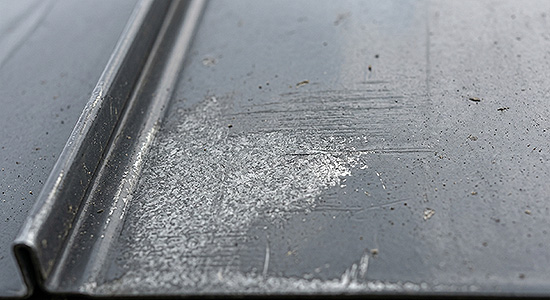
The main things to avoid are:
- high pressure used up close, which can strip coatings, dent panels, or force water under seams and laps;
- abrasive tools such as wire brushes, steel wool, or scouring pads, which scratch the paint and can expose bare metal;
- harsh chemicals that the coating manufacturer does not recommend, which can break down the finish;
- skipping the manufacturer's maintenance guide, since many manufacturers list approved cleaners and methods, and using something else can void the warranty.
The rule behind all four is the same: let the cleaning solution do the work, not force.
How to clean a metal roof, step by step
Standing seam panels are more delicate than corrugated ones, so check your manufacturer's guidance for your specific panels first. In general, the order that protects the finish looks like this:- Remove leaves and debris
Clear valleys, overlaps, vents, and the area around fasteners by hand or with a soft broom before using any water. - Wash at low pressure or soft wash
Soft washing a metal roof means applying a cleaning solution suited to the coating at low pressure, so the solution loosens dirt and growth instead of force. Use only a product the coating manufacturer approves. - Use a soft-bristle brush where needed
A soft brush or sponge handles stubborn spots without scratching. - Rinse from the top down
Rinse from the ridge toward the eaves, following the direction of the panels, so dirty water does not get pushed under overlaps.
Choosing a specific product depends on your roof's coating and its manufacturer, so we left brand names out on purpose. Good metal roof maintenance comes down to gentle cleaning at the right time.
Rust stains around screws
Orange stains around screws deserve a closer look before any scrubbing. Rust at a fastener often means moisture is reaching the connection point or the coating around it has been compromised, for example by an aging washer, a loose screw, or a scratch. Washing can remove surface staining, but it will not fix the cause, and rubbing hard can scratch the paint even more.If you notice rust stains on a metal roof, clean lightly, then have the fasteners and coating checked. Small spots caught early are usually a small job. Use only the touch-up paint the manufacturer approves, and don't repeatedly tighten loose screws without checking them.
Moss on shaded sections
Moss tends to settle on the shaded side of a metal roof, where the surface stays damp. A soft-wash approach is a good fit because it treats the growth with a solution suited to the finish and doesn't rely on scraping. Avoid scraping with metal tools or stiff brushes, since a scratch can start the same corrosion you are trying to prevent. Moss that returns season after season usually means shade and moisture are still there, so trimming back branches helps.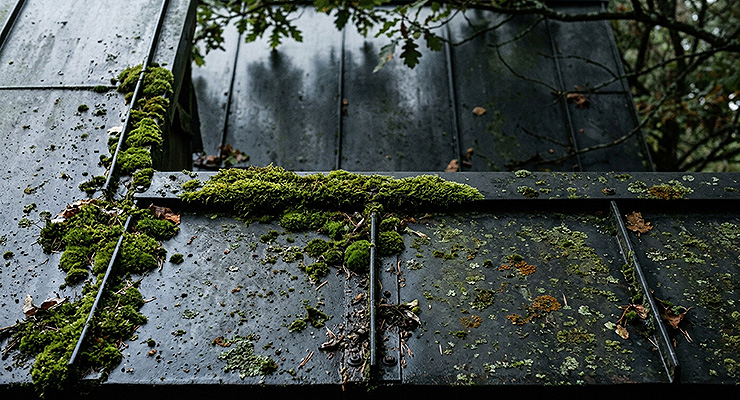
Safety: height, slippery surfaces, and when to call a professional
Working on a roof is dangerous, and metal makes it worse. Wet panels are slippery, a steep pitch adds to the risk, and a fall from a roof is serious. Please don't climb onto a wet, frosty, or steep metal roof yourself.Call a professional if:
- the roof is steep, tall, or difficult to reach safely;
- you are not sure which cleaners the coating manufacturer approves;
- you see rust around fasteners, scratches, or peeling paint;
- you would be working alone, without fall protection.
Cleaning only helps if the roof gets a chance to dry, and a rough guide is daytime temperatures above about 40°F. Once nights stay below freezing, it is better to wait until spring.
If you would like help before winter, we are here to help. At HiCleaners, we offer a free inspection of your metal roof and can recommend a gentle cleaning approach that suits its material and finish. Request a free estimate or call 781-333-8758.
 Facebook
 LinkedIn
 Pinterest
 Twitter