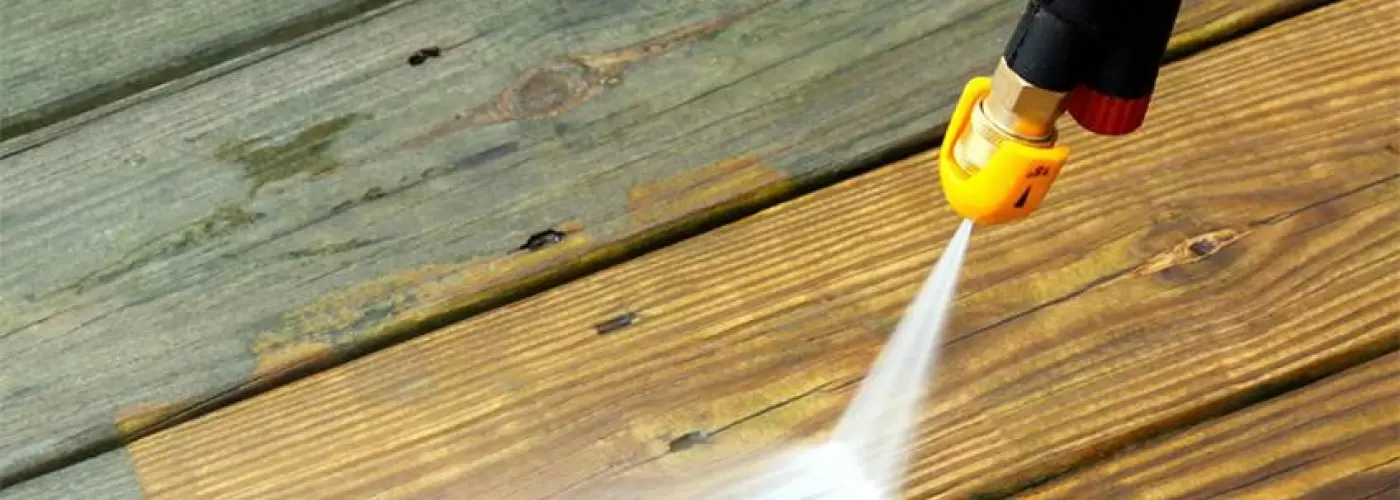
 Larger surfaces like the exteriors of brick buildings, wooden decking, concrete or mixed media surfaces like pavements and tiled areas or even the surface of vehicles can be cleaned using the method of power washing. Whether you plan to undertake power washing for your residence, office, business premises or vehicle, our suggestion is that hiring a professional cleaning service that has an experience of handling such jobs would be a better idea than going at it alone. Since power washing needs to be varied depending on the surface that is being cleaned, safety tips should form an important part of the process.
Pressure washing is capable of removing deeply entrenched layer of grime, dust, mold, etc from the surface that is being cleaned, so the handler should be aware of how much pressure to use else it can rip away or damage the upper layer of the surface. Due to its efficacy, pressure washing is often undertaken to clean house siding, garden paths, concrete steps and external wooden decks. Pressure wash jet should always be pointed towards the surface to be cleaned, never at people or animals because it can cause severe body harm. Also care should be taken to ensure that all electric connections are safely covered before directing the pressure wash spray at a surface.
It is also important to check with your contractor about the chemicals, if any, to be used for cleaning. Most cleaning services use biodegradable chemicals, especially for homes, when power washing areas which see more accumulation of dust and dirt, like areas surrounding the rainwater drains. The cost of power washing depends on the area to be cleaned and the general condition of the area. Sticky and oily surfaces will require more labor, hence their cost of cleaning will be higher than other surfaces. For more information on methods, modes and cost of power cleaning, please log on to www.hicleaners.net.
Larger surfaces like the exteriors of brick buildings, wooden decking, concrete or mixed media surfaces like pavements and tiled areas or even the surface of vehicles can be cleaned using the method of power washing. Whether you plan to undertake power washing for your residence, office, business premises or vehicle, our suggestion is that hiring a professional cleaning service that has an experience of handling such jobs would be a better idea than going at it alone. Since power washing needs to be varied depending on the surface that is being cleaned, safety tips should form an important part of the process.
Pressure washing is capable of removing deeply entrenched layer of grime, dust, mold, etc from the surface that is being cleaned, so the handler should be aware of how much pressure to use else it can rip away or damage the upper layer of the surface. Due to its efficacy, pressure washing is often undertaken to clean house siding, garden paths, concrete steps and external wooden decks. Pressure wash jet should always be pointed towards the surface to be cleaned, never at people or animals because it can cause severe body harm. Also care should be taken to ensure that all electric connections are safely covered before directing the pressure wash spray at a surface.
It is also important to check with your contractor about the chemicals, if any, to be used for cleaning. Most cleaning services use biodegradable chemicals, especially for homes, when power washing areas which see more accumulation of dust and dirt, like areas surrounding the rainwater drains. The cost of power washing depends on the area to be cleaned and the general condition of the area. Sticky and oily surfaces will require more labor, hence their cost of cleaning will be higher than other surfaces. For more information on methods, modes and cost of power cleaning, please log on to www.hicleaners.net.Pressure Washing Must Knows
Power Washing or Pressure Washing are the terms used to describe high pressure water spraying through a powered motor to clean a surface of dirt, mold, grime and oil deposition. Usually the water is pumped at high pressure to create a concentrated spray and sprayed on the affected surface through a nozzle or hose which comes with an automatic switch to turn it on. The water can be sprayed using the nozzle in fan pattern, pinpoint stream or a loose jet, depending on the requirement of the surface to be cleaned.
Larger surfaces like the exteriors of brick buildings, wooden decking, concrete or mixed media surfaces like pavements and tiled areas or even the surface of vehicles can be cleaned using the method of power washing. Whether you plan to undertake power washing for your residence, office, business premises or vehicle, our suggestion is that hiring a professional cleaning service that has an experience of handling such jobs would be a better idea than going at it alone. Since power washing needs to be varied depending on the surface that is being cleaned, safety tips should form an important part of the process.
Pressure washing is capable of removing deeply entrenched layer of grime, dust, mold, etc from the surface that is being cleaned, so the handler should be aware of how much pressure to use else it can rip away or damage the upper layer of the surface. Due to its efficacy, pressure washing is often undertaken to clean house siding, garden paths, concrete steps and external wooden decks. Pressure wash jet should always be pointed towards the surface to be cleaned, never at people or animals because it can cause severe body harm. Also care should be taken to ensure that all electric connections are safely covered before directing the pressure wash spray at a surface.
It is also important to check with your contractor about the chemicals, if any, to be used for cleaning. Most cleaning services use biodegradable chemicals, especially for homes, when power washing areas which see more accumulation of dust and dirt, like areas surrounding the rainwater drains. The cost of power washing depends on the area to be cleaned and the general condition of the area. Sticky and oily surfaces will require more labor, hence their cost of cleaning will be higher than other surfaces. For more information on methods, modes and cost of power cleaning, please log on to www.hicleaners.net.
Larger surfaces like the exteriors of brick buildings, wooden decking, concrete or mixed media surfaces like pavements and tiled areas or even the surface of vehicles can be cleaned using the method of power washing. Whether you plan to undertake power washing for your residence, office, business premises or vehicle, our suggestion is that hiring a professional cleaning service that has an experience of handling such jobs would be a better idea than going at it alone. Since power washing needs to be varied depending on the surface that is being cleaned, safety tips should form an important part of the process.
Pressure washing is capable of removing deeply entrenched layer of grime, dust, mold, etc from the surface that is being cleaned, so the handler should be aware of how much pressure to use else it can rip away or damage the upper layer of the surface. Due to its efficacy, pressure washing is often undertaken to clean house siding, garden paths, concrete steps and external wooden decks. Pressure wash jet should always be pointed towards the surface to be cleaned, never at people or animals because it can cause severe body harm. Also care should be taken to ensure that all electric connections are safely covered before directing the pressure wash spray at a surface.
It is also important to check with your contractor about the chemicals, if any, to be used for cleaning. Most cleaning services use biodegradable chemicals, especially for homes, when power washing areas which see more accumulation of dust and dirt, like areas surrounding the rainwater drains. The cost of power washing depends on the area to be cleaned and the general condition of the area. Sticky and oily surfaces will require more labor, hence their cost of cleaning will be higher than other surfaces. For more information on methods, modes and cost of power cleaning, please log on to www.hicleaners.net. Facebook
 LinkedIn
 Pinterest
 Twitter