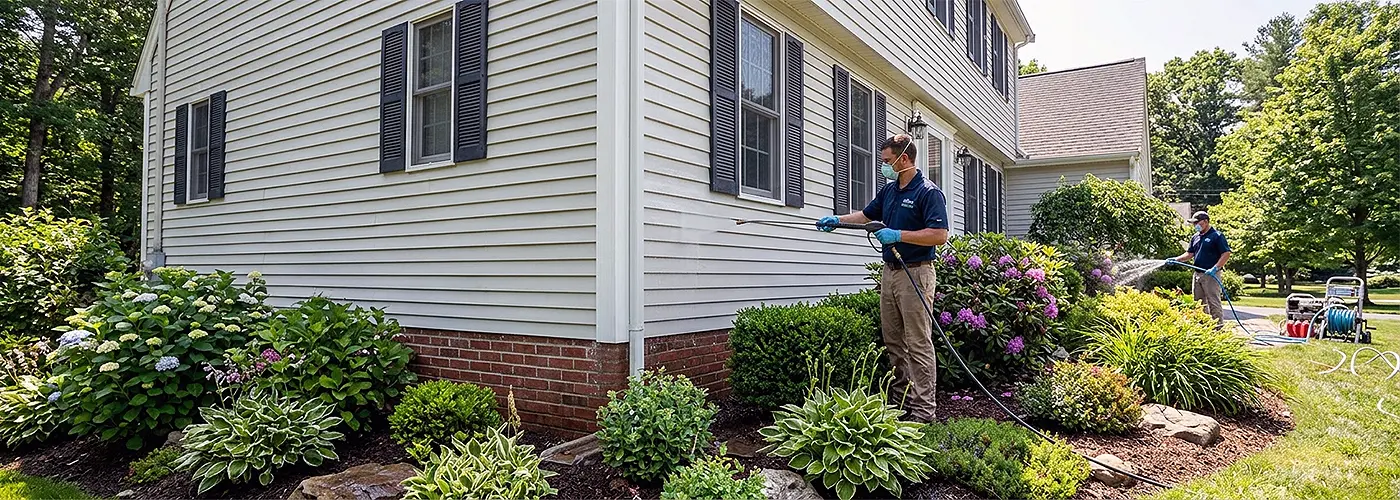
Around Massachusetts, it's common to see mature hydrangeas, hostas, rhododendrons, and boxwoods growing just inches from the siding. Experienced house-washing crews work around these foundation plantings every day, using proven methods to protect your landscaping while restoring your home's exterior.
Why plants are at risk during a house wash – and when they aren't
Understanding how plant protection works starts with understanding where the actual risk comes from.House washing solutions are designed to remove mold, mildew, algae, and bacteria that build up on siding over time. Many professional cleaning solutions contain sodium hypochlorite, the same active ingredient found in household bleach, but at carefully controlled concentrations formulated for exterior cleaning.
Used carelessly, those solutions can damage leaves or stress sensitive plants if they remain on foliage or soak into dry soil. However, that's not an issue with house washing itself. It's an issue with poor technique.
The difference comes down to the crew performing the work. An experienced exterior cleaning company follows a series of protective steps before, during, and after the wash. When those steps are part of the process, landscaping damage is uncommon, even around homes with well-established gardens.
How professionals protect landscaping during a house wash
Protecting plants follows a straightforward process that's been refined over years of cleaning homes throughout New England. Rather than reacting if something happens, experienced technicians prevent problems before they begin.Thoroughly soaking plants before cleaning starts
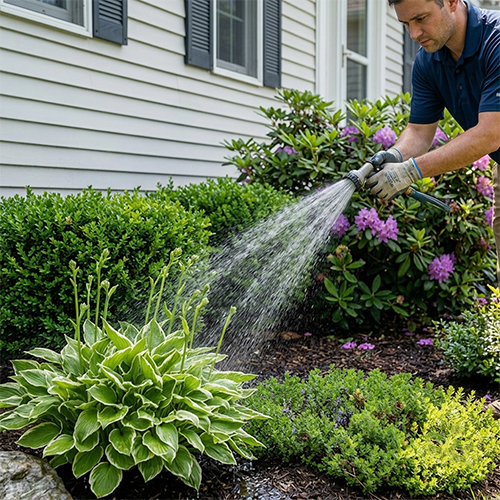
One of the first things a crew does is thoroughly wet nearby shrubs, flower beds, grass and the surrounding soil with clean water.
This simple step makes a significant difference. Saturated soil absorbs far less cleaning solution, while wet leaves are much less likely to retain any product that lands on them. Instead, any light overspray becomes heavily diluted before it can affect the plant.
Applying cleaning solution with precision
Soft washing gives technicians excellent control over where cleaning solution is applied.Instead of blasting large amounts of water across the property, the solution is directed onto the siding itself, section by section. That controlled application greatly reduces drifting mist and unnecessary overspray compared to traditional high-pressure washing.
This is especially important around older Colonial homes and other New England properties where mature landscaping often sits close to the foundation.
Using biodegradable cleaning products
Professional house washing companies use cleaning solutions designed to break down after use.While every cleaning product should be handled responsibly, biodegradable formulations leave far less residual impact on surrounding landscaping than harsher chemicals that remain active longer.
Rinsing throughout the cleaning process
A careful crew doesn't simply spray the house and wait until the end to rinse everything.Nearby plants are rinsed regularly as the work progresses. This continual dilution prevents the cleaning solution from remaining on the leaves long enough to cause problems.
It's a simple habit, but it's one of the biggest reasons experienced crews rarely encounter landscaping issues.
Giving everything a final rinse
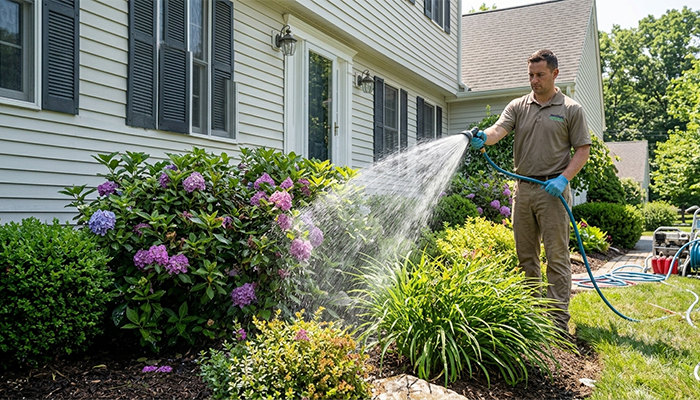
Once the house has been cleaned, all nearby landscaping receives one last generous rinse.
Shrubs, flower beds, mulch, grass, and surrounding soil are flushed with fresh water to remove any remaining traces of cleaning solution.
Performing one final walk-around
Before leaving the property, conscientious technicians take one last look around the home.If they notice any areas that deserve additional rinsing, they take care of them before packing up. It's a quick final check that reflects attention to detail rather than rushing to the next job.
Is soft washing safe for plants?
For most homes, soft washing is the safest approach for both your siding and your landscaping.The biggest advantage is control. Since the cleaning solution is applied at low pressure, technicians can place it exactly where it's needed, avoiding the heavy mist and overspray associated with high-pressure washing.
Soft washing also relies on cleaning agents to eliminate organic growth instead of brute force. That means there's less contaminated water, debris, and dirt being blasted across flower beds during the cleaning process.
When combined with proper pre-wetting, ongoing rinsing, and a thorough final rinse, soft washing allows experienced crews to safely clean homes surrounded by mature landscaping without harming healthy plants.
A few things homeowners can do before the appointment
Your house-washing company will handle plant protection, but there are a few easy ways to prepare before the crew arrives.- Let the technician know about any newly planted shrubs or flowers that may need extra attention.
- Water your garden the day before if Massachusetts has been going through a dry stretch.
- Move lightweight potted plants away from the immediate work area if convenient.
- Leave established landscaping exactly as it is. Experienced crews work around mature plantings every day, so there's no need to trim or remove anything beforehand.
These simple steps aren't required, but they give delicate plants an extra layer of protection and help the cleaning process go even more smoothly.
Protect your landscaping without skipping your house wash
A clean home and healthy landscaping go hand in hand. You shouldn't have to choose between protecting your garden investment and maintaining your home's exterior.The key is hiring a company that treats plant protection as part of every house wash, not as an optional add-on. From thoroughly soaking landscaping before cleaning begins to carefully applying cleaning solution, rinsing throughout the job, and performing a final inspection, experienced crews build these precautions into every visit.
At HiCleaners, that's exactly how we approach every house wash throughout Massachusetts. If you've been delaying exterior cleaning because you're concerned about your hydrangeas, hostas, shrubs, or foundation plantings, we're always happy to explain exactly how we'll protect them before we begin.
Get a free, no-obligation house wash estimate or call 781-333-8758. We'd be glad to answer your questions and help you feel confident before scheduling your service.
Your siding can look its best without sacrificing the landscaping you've spent years growing.
 Facebook
 LinkedIn
 Pinterest
 Twitter