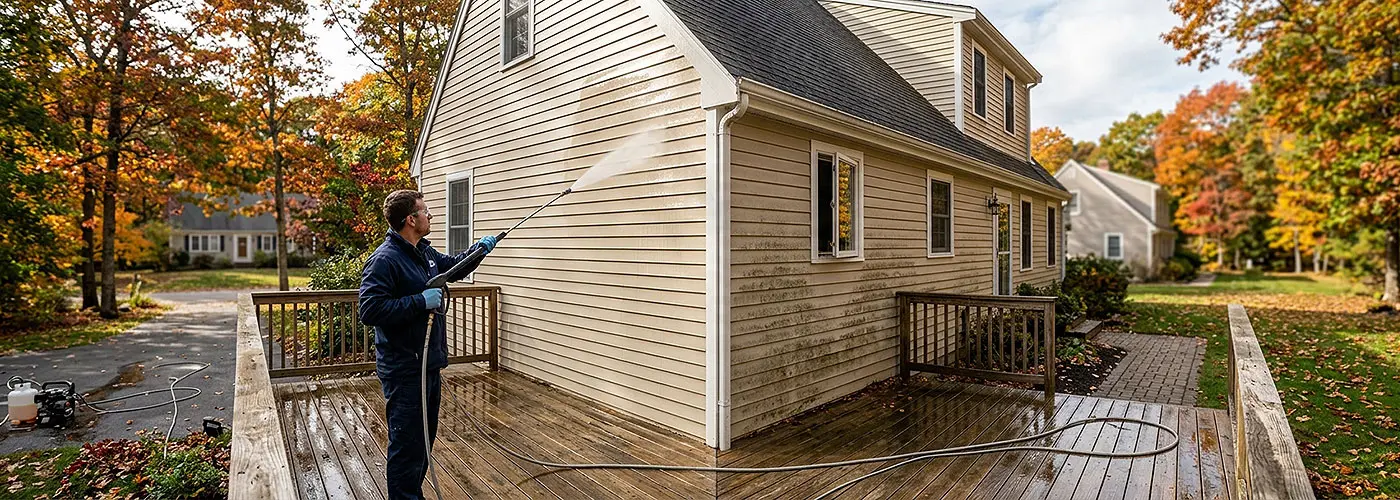
Taking the time to clean the exterior before painting helps create a stronger bond, improves the appearance of the finished project, and can significantly extend the life of the new coating.
Why cleaning before painting matters
Exterior surfaces collect much more than visible dirt over the course of a year. Dust, pollen, oxidation, mildew, algae, and the chalky residue left behind as old paint ages all interfere with the way new paint or stain adheres.A proper exterior wash removes these contaminants before any coating is applied. It also eliminates living organic growth that can continue spreading beneath fresh paint if it isn't treated beforehand.
Cleaning the surface first creates a stable foundation for paint or stain, helping achieve a smoother finish and longer-lasting protection.
Soft washing or pressure washing? It depends on the surface
Different materials require different cleaning methods before painting or staining.Siding and painted exterior surfaces
Soft washing is usually the preferred option for vinyl siding, painted wood, fiber cement, and other delicate exterior materials. Using low pressure together with specialized cleaning solutions removes dirt, mold, mildew, and algae without damaging the existing surface or forcing water behind the siding.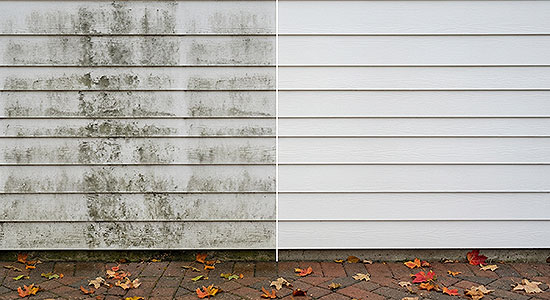
Wood decks before staining
Natural wood decks are typically cleaned with low-pressure washing that removes dirt, weathered wood fibers, and surface discoloration, preparing the wood to absorb stain more evenly. Excessive pressure should always be avoided because it can damage the wood grain.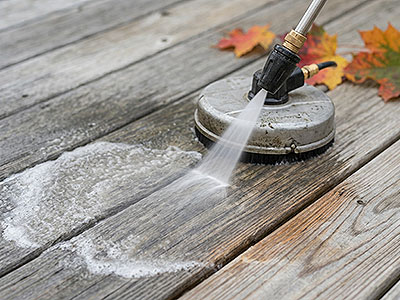
Concrete, brick, and masonry
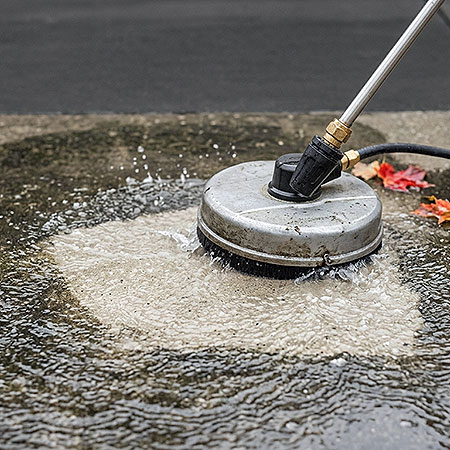
More durable surfaces such as concrete, brick, and many masonry materials can usually tolerate traditional pressure washing. Removing dirt, mildew, and old surface contaminants helps coatings and sealers bond more effectively.Choosing the appropriate cleaning method for each material is just as important as cleaning the surface itself.
Give surfaces enough time to dry
After cleaning, every surface needs adequate time to dry before paint or stain is applied.The exact drying time depends on several factors, including temperature, humidity, sun exposure, airflow, and the type of material being painted. Wood generally requires more drying time than vinyl or masonry, and cool, damp fall weather in Massachusetts can extend that process even further.
Rather than working from a fixed timeline, it's best to allow enough drying time for the specific weather conditions. Painting over surfaces that still contain moisture can lead to bubbling, peeling, and premature coating failure.
Coordinate cleaning with your painting schedule
One of the most common mistakes homeowners make is scheduling pressure washing only a day or two before the painters arrive.Exterior cleaning should be treated as part of the painting project – not as a separate task. Planning both services together allows enough time for cleaning, drying, surface inspection, and any necessary repairs before primer or paint is applied.
Coordinating the schedule also reduces delays caused by changing weather, which is especially important during the shorter painting season in Massachusetts.
Why proper preparation saves money
Skipping the cleaning step may save a little time up front, but it often leads to far more expensive problems later.Paint that begins peeling after only a year or two frequently requires scraping, additional preparation, and repainting far sooner than expected. By contrast, starting with a properly cleaned surface helps maximize the life of the new finish and reduces the likelihood of premature maintenance.
Many homeowners choose to work with professionals who coordinate exterior cleaning with their painting contractor, ensuring the surface is clean, dry, and ready before the first coat is applied.
At HiCleaners, we coordinate directly with painting and staining contractors across Massachusetts to time the wash so your surface is clean and fully dry before the first coat goes on. Get a free estimate and schedule coordination, or call 781-333-8758.
A strong finish starts with proper preparation
The quality of an exterior paint or stain project depends on much more than the products you choose. It begins with the condition of the surface underneath.Removing dirt, mildew, algae, pollen, and chalky residue before painting gives new coatings the best chance to bond properly and perform as intended. With the right preparation – and enough time for surfaces to dry – your investment in painting or staining is far more likely to look better and last longer.
 Facebook
 LinkedIn
 Pinterest
 Twitter