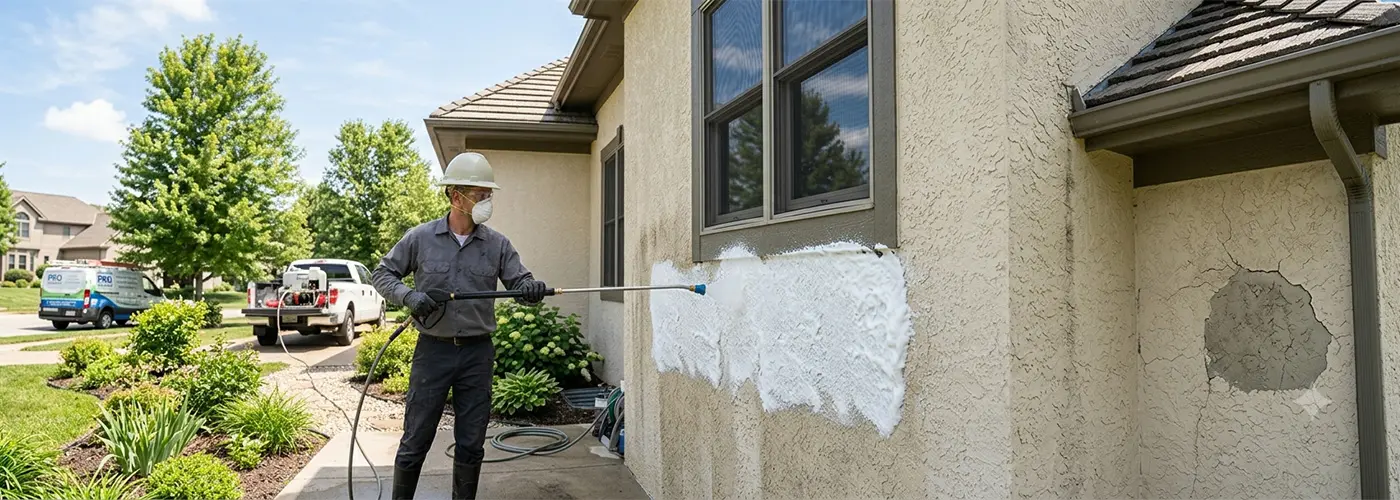
Below, we explain why, when light pressure may be acceptable and how professionals determine the right method for your home.
Why is stucco a delicate exterior surface?
Stucco is a cement-based exterior finish. It is strong and breathable, but not indestructible. EIFS, or Exterior Insulation and Finish System, consists of insulation boards covered with a thin synthetic coating. Although both surfaces appear solid, they are more delicate than brick or concrete.Over time, stucco and EIFS can develop small hairline cracks. They allow limited moisture movement, but they are not waterproof barriers. Their surface can chip or erode when exposed to force. In EIFS systems, trapped moisture can become a serious issue if water gets behind the finish.
Applying high pressure to these materials does more than remove dirt. It can weaken the surface and compromise the integrity of the entire exterior system.

What is pressure washing, and why can it damage stucco?
Pressure washing uses high-powered water, often ranging from 1,500 to 4,000 PSI. While effective for hard surfaces like concrete driveways, it can be too aggressive for stucco.The main risks of pressure washing stucco include:
- Surface cracking
High pressure can widen existing hairline cracks or create new fractures in the finish coat. - Chipping and erosion
Direct impact may dislodge small pieces of stucco, especially on older homes. - Water intrusion
Water can be forced beneath the surface layer, potentially leading to mold growth, rot in the underlying framing, or damage to the insulation. - EIFS delamination
In EIFS systems, excessive pressure can weaken adhesion between layers, leading to bubbling or separation.
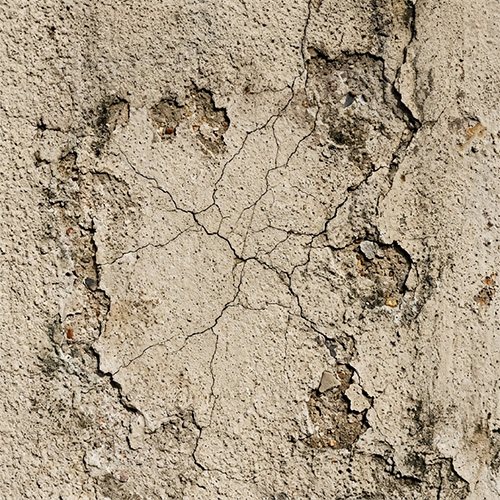
These issues are not always immediately visible. Damage often appears weeks or months later, when moisture problems surface inside the wall system.
What is soft washing, and why is it the standard for stucco?
Soft washing is a cleaning method that relies on low water pressure combined with specially formulated cleaning solutions designed to break down organic growth.Instead of blasting away dirt, soft washing works by:
- applying a biodegradable cleaning solution to the surface;
- allowing dwell time so the solution kills mold, algae, and mildew at the root;
- rinsing gently with low-pressure water to remove residue.
Because the pressure is similar to that of a garden hose, the surface remains intact. The cleaning solution does the heavy lifting, not mechanical force.
Soft washing is widely recognized as the safest cleaning method for delicate exterior surfaces. It is especially suitable for stucco homes, EIFS systems, painted wood siding, detailed trim, and older surfaces that have been repaired.
It does not stress the material because it relies on low pressure. Instead of simply rinsing away dirt, soft washing removes visible stains and eliminates the organic growth that causes discoloration to return. This results in a cleaner surface that stays fresh for longer.
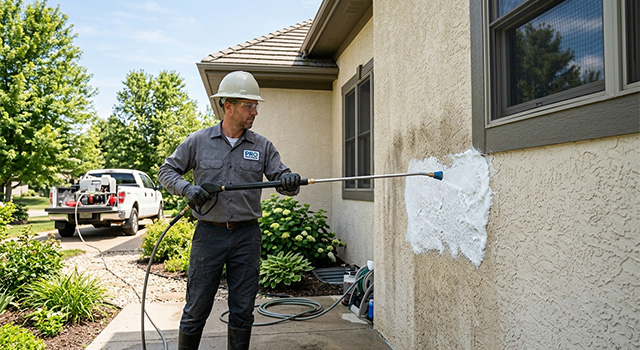
When is light pressure acceptable on stucco?
Although high-pressure washing is risky, there are limited scenarios where controlled, low-pressure rinsing may be used.In professional practice, light pressure may be acceptable when:
- the stucco is in excellent structural condition – no visible cracks, soft spots, or prior moisture issues;
- the PSI is significantly reduced – typically well below traditional pressure washing levels;
- a wide spray pattern is used – this diffuses force and minimizes impact on the surface;
- the goal is rinsing – not aggressive cleaning – the cleaning solution should already have loosened contaminants.
The key distinction is this: pressure should never be the primary cleaning mechanism for stucco.
Soft washing vs. pressure washing: Side-by-side comparison
To better understand the difference, consider the following comparison:| Feature | Pressure Washing | Soft Washing |
|---|---|---|
| Cleaning method | High water force | Low pressure + cleaning solution |
| Risk to stucco | High | Minimal when properly applied |
| Mold removal | Surface-level only | Kills mold and algae at the source |
| Water intrusion risk | Elevated | Significantly reduced |
| Recommended for EIFS | No | Yes |
The fundamental difference is control. Soft washing prioritizes surface protection while still delivering effective results.
How professionals determine the right method
Not all stucco homes are the same. Before selecting a cleaning method, a professional technician carefully evaluates the exterior's condition. The process usually begins with a visual inspection to check for cracks, weak spots, or visible damage.The technician also determines whether the staining is caused by organic growth or mineral deposits. Previous repairs or repainting are taken into account, since they can affect how the surface reacts to cleaning. In some cases, a small test area is cleaned first to observe the response.
Only after fully assessing the material and its condition does the team choose the safest and most appropriate cleaning technique.
Why water intrusion is the biggest risk
Water intrusion is the most serious risk associated with improper pressure washing. When water is forced behind stucco or EIFS, the damage is often hidden at first. Over time, it can lead to mold growth inside the wall system, wood rot in the framing, and deterioration of insulation. Stains may appear on interior walls, and in severe cases, structural integrity can be affected.Stucco is designed as a cladding system. It is not a waterproof barrier. Because of this, controlling moisture exposure is essential. Soft washing greatly reduces the risk of pushing water into cracks, seams, or expansion joints, making it a much safer option for long-term protection.
Long-term results: Which method lasts longer?
Many homeowners assume high pressure means deeper cleaning. In reality, pressure washing often removes only surface staining.Soft washing provides longer-lasting results because:
- it eliminates biological growth instead of scattering spores;
- it reduces regrowth cycles;
- it preserves protective coatings and paint;
- it minimizes surface stress.
By addressing the root cause of discoloration, soft washing helps stucco maintain a clean appearance for longer.
Final Recommendation: Protect your stucco investment
Stucco and EIFS exteriors are durable when properly maintained, but they are not designed to withstand high-pressure cleaning. The wrong method can result in cracks, chipping, and costly moisture damage.Soft washing has become the preferred standard for delicate surfaces because it combines low pressure with targeted cleaning solutions that protect structural integrity.
If you are unsure which method is right for your home, schedule a free exterior inspection with our team. We will assess the condition of your stucco and recommend the safest, most effective cleaning approach tailored to your property.
Your exterior is an investment. Cleaning it the right way ensures it stays strong, beautiful, and protected for years to come.
 Facebook
 LinkedIn
 Pinterest
 Twitter