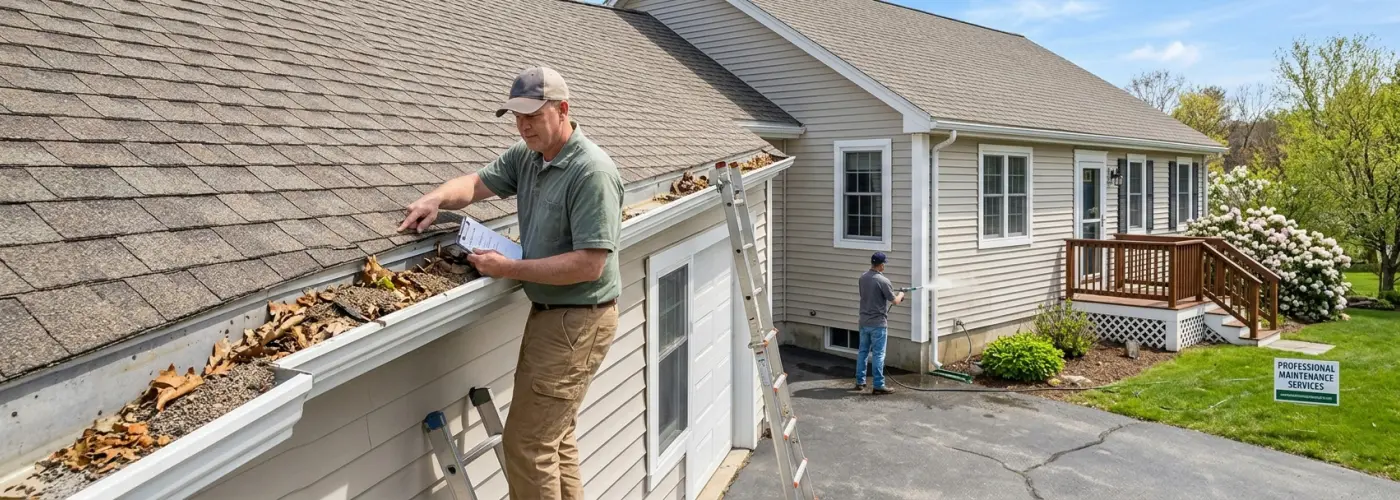
Why spring exterior maintenance matters in Massachusetts
Massachusetts winters put significant stress on homes. Constant freeze-thaw cycles cause materials to expand and contract, snow buildup adds weight to roofing systems, and ice dams trap moisture along the edges. At the same time, wind-driven rain and road salt accelerate wear on siding and exterior trim.If these issues are not addressed in the spring, they can develop into roof leaks, foundation cracks, clogged drainage systems, siding damage, and even moisture intrusion, leading to mold growth.
A well-organized spring maintenance routine allows you to catch problems early and extend the lifespan of your home’s exterior components.
Essential spring exterior maintenance checklist
Massachusetts winters are demanding, so your spring exterior inspection should follow a structured approach. Below, each priority task is organized for clarity and easy reference.1. Inspect and clean gutters and downspouts
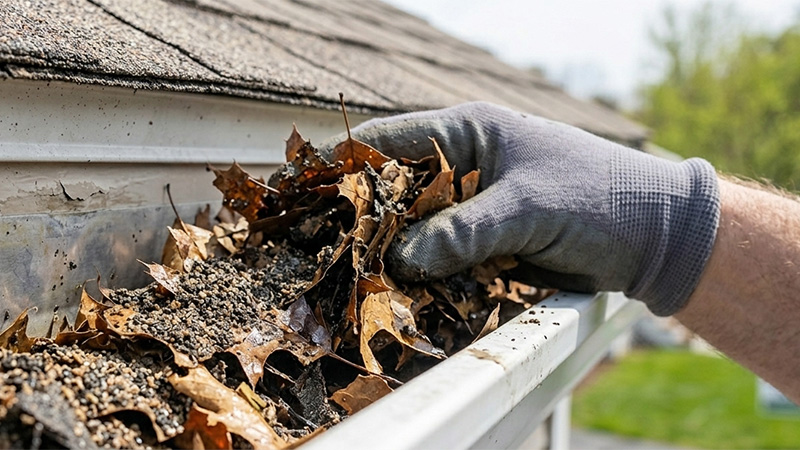
Your gutter system plays a critical role in protecting the foundation and roof structure. After winter, it is common to find debris buildup, loose brackets, or ice damage.
Start with a full inspection that includes:
- remove debris from gutters – clear leaves, twigs, and granules that may have accumulated. Blocked gutters can cause water overflow and foundation issues;
- check for sagging or separation – snow and ice weight can pull gutters away from the fascia board. Secure or replace damaged sections;
- test downspout flow – flush water through the system to ensure proper drainage. Confirm that extensions direct water at least 4 to 6 feet away from the foundation;
- look for leaks at seams – seal minor gaps and replace sections showing corrosion or cracking.
2. Assess roof condition after snow and ice
Your roof takes the full impact of winter conditions, from heavy snow loads and ice dams to strong winds that can loosen shingles and flashing. Spring is the right time to perform a careful visual inspection from the ground or schedule a professional evaluation if needed. Look for missing or curled shingles, cracked or lifted flashing around chimneys and vents, damage near the eaves from ice buildup, uneven or sagging areas, and shingle granules collecting in gutters.Taking care of minor roofing problems early in the season helps prevent leaks during spring storms and extends your roof's overall lifespan.
3. Wash windows and inspect seals
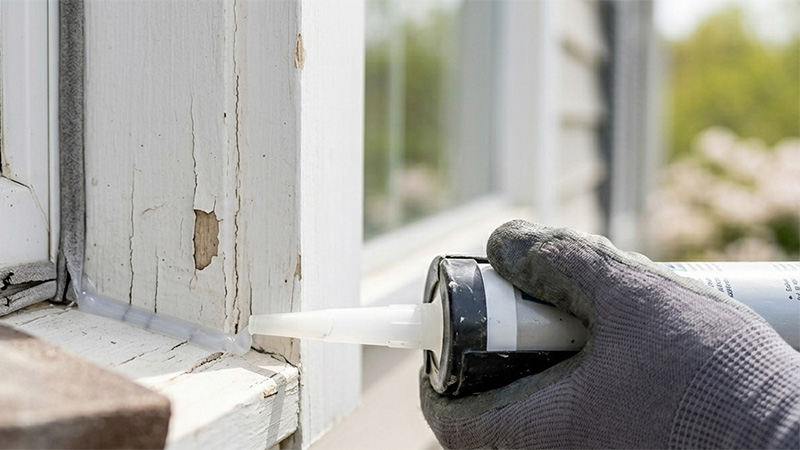
Winter often leaves windows coated with grime, salt residue, and lingering moisture damage. Spring is the perfect time to clean exterior glass and frames and evaluate overall window performance. As you work, check for cracked or separated caulking, worn weather stripping, and any peeling paint or rot around the trim.Damaged seals can reduce energy efficiency and allow moisture to enter the home, so addressing these issues now helps protect against spring rain and prepares your windows for the heat of summer.
4. Clean and evaluate siding
Massachusetts homes often face salt spray, mildew, algae growth, and moisture retention during winter.Start with a gentle exterior wash using appropriate cleaning methods for your siding type. Vinyl, fiber cement, and wood all require different approaches.
During cleaning, inspect for:
- cracks or warping – freeze-thaw cycles can cause expansion damage;
- loose panels or boards – high winds may loosen fasteners;
- mold or mildew – dark streaks may indicate moisture retention;
- peeling paint or exposed wood – these areas are vulnerable to rot and insect damage.
5. Check exterior trim, decks, and railings
Wood trim, decks, and porches tend to suffer after months of snow, ice, and moisture exposure. Spring is the right time to carefully inspect these areas for soft or rotting wood, loose railings or stair components, popped nails or fasteners, surface cracks in decking boards, and peeling stain or paint.Addressing these issues early by sanding, resealing, or repainting helps protect the wood and prevents further deterioration before summer humidity sets in.
6. Examine driveways, walkways, and foundations
Massachusetts freeze-thaw cycles frequently cause pavement and concrete to expand and contract, leading to cracking and shifting over time. In the spring, carefully inspect driveways, walkways, and foundation areas for widening cracks, uneven pavers or bricks, crumbling mortar joints, visible foundation cracks near ground level, and signs of soil erosion along the home's perimeter.Addressing these issues early helps prevent water from seeping in and further damaging the structure.
7. Inspect outdoor fixtures and exterior lighting
Winter storms can loosen lighting fixtures and damage exterior hardware, so spring is a good time to ensure everything is secure and functioning properly. Check that light fixtures are firmly mounted and functioning, confirm that wiring is intact and protected, test door hardware for smooth operation, and ensure house numbers remain clearly visible and securely attached.Proper exterior lighting not only improves safety but also enhances your home’s curb appeal.
Why hiring professionals can save time and improve safety
While some tasks can be handled independently, many exterior maintenance projects involve ladders, roof access, power washing equipment, or structural inspection.Outsourcing to experienced professionals offers key benefits:
- improved safety when working at heights;
- thorough inspections that catch hidden issues;
- proper tools and cleaning methods;
- time savings for busy homeowners;
- professional repairs that extend system lifespan.
Preparing your home after a harsh New England winter is not just about appearance. It is about safeguarding structural integrity, preventing moisture damage, and preserving property value. A proactive spring exterior maintenance plan keeps your Massachusetts home strong, safe, and ready for the season ahead.
 Facebook
 LinkedIn
 Pinterest
 Twitter