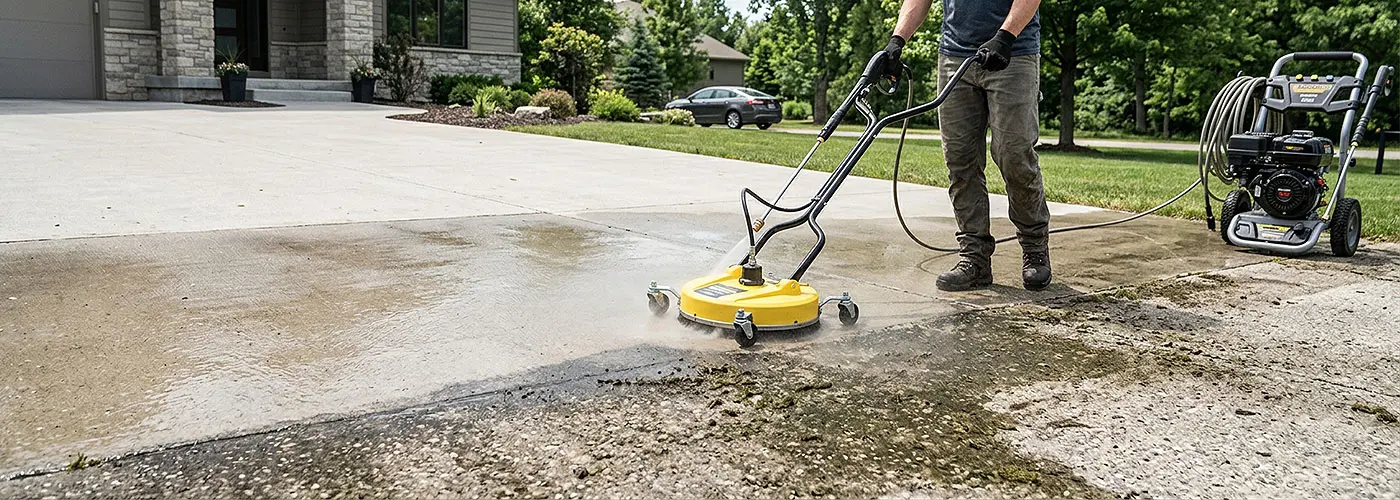
The right approach isn't determined by PSI alone. Effective concrete cleaning depends on matching the pressure to the surface type, condition, and equipment used.
Recommended PSI ranges for different concrete surfaces
Different concrete surfaces require different cleaning approaches:- Driveways and sidewalks
Most fully cured residential driveways and sidewalks can be cleaned effectively using moderate to moderately high pressure. This is typically enough to remove dirt, algae, and everyday buildup without damaging the concrete when used correctly. - Garage floors
Garage floors often collect heavier dirt and general grime than outdoor concrete. They may require slightly more aggressive cleaning, especially when combined with an appropriate concrete cleaner. - New concrete
Freshly poured concrete should be cleaned with extra care. Because concrete continues to cure for many months after installation, applying excessive pressure too soon can permanently damage the surface. In some cases, it's best to postpone pressure washing until the concrete has fully matured. - Stamped or decorative concrete
Decorative concrete surfaces usually require lower pressure than standard concrete. Their textured finishes, coloring, and protective sealers can be damaged by excessive force, making a gentler cleaning method the safer choice.
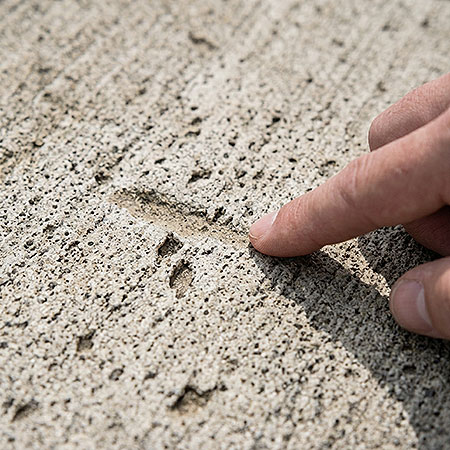
Using the same pressure setting for every concrete surface is one of the most common causes of accidental damage.
PSI is only part of the equation
Many homeowners focus only on PSI, but several other factors determine how effectively – and safely – a pressure washer cleans concrete.Water flow (GPM)
Water flow helps carry dirt and debris away from the surface. Two machines with similar pressure can produce noticeably different results if their water flow differs.Nozzle selection
A narrow spray tip concentrates water into a much smaller area, greatly increasing the force against the concrete. Wider spray patterns distribute pressure more evenly and reduce the risk of surface damage.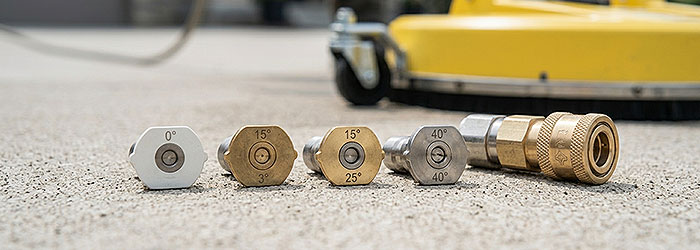
Distance from the surface
Moving the spray wand closer increases the cleaning force, while keeping it farther away provides a gentler cleaning action. Small adjustments in distance can make a significant difference.Cleaning solutions
Concrete-safe detergents help loosen dirt, algae, and organic buildup before pressure washing begins. Using an appropriate cleaner often reduces the need for excessive pressure.Taken together, these factors have just as much influence on the final result as PSI itself.
Why surface cleaners produce better results
Professional concrete cleaning often uses a surface cleaner attachment rather than a standard spray wand.Instead of directing a single concentrated stream of water across the concrete, a surface cleaner uses rotating spray bars housed beneath a protective housing to clean evenly across the entire surface. This produces a more consistent finish while greatly reducing the streaks and overlap marks that handheld wands commonly leave behind.
In many cases, the difference in appearance comes from using the right attachment rather than increasing pressure.
When lower pressure is the better choice
Higher pressure isn't always the safest or most effective option.Pressure should generally be reduced when cleaning decorative concrete, areas near expansion joints, surfaces with existing hairline cracks, or concrete that already shows signs of wear. Starting with a lower setting and increasing pressure only when necessary helps minimize the risk of permanent damage.
Testing a small, less noticeable section before cleaning the entire driveway or patio is also a good way to confirm the chosen settings are appropriate for the surface.
Why professional equipment makes a difference
Professional concrete cleaning isn't simply about using a more powerful pressure washer.Experienced technicians adjust pressure, water flow, spray tips, cleaning solutions, and equipment based on the condition of the concrete rather than relying on a single setting for every project. This approach helps achieve a cleaner, more consistent result while reducing the risk of etching or other surface damage.
Homeowners who prefer professional cleaning often work with companies that evaluate each concrete surface individually before selecting the appropriate cleaning method.
At HiCleaners, we adjust PSI, nozzle, and technique to the specific concrete surface and its condition, rather than using a single setting for every driveway. Get a free concrete cleaning estimate or call 781-333-8758.
Clean concrete without unnecessary damage
Pressure washing can dramatically improve the appearance of concrete, but using the correct settings is just as important as using the right equipment.Matching the cleaning method to the surface helps remove dirt and organic buildup while preserving the concrete's finish. Taking a careful, surface-specific approach produces better-looking results and helps protect driveways, sidewalks, patios, and other concrete surfaces for years to come.
 Facebook
 LinkedIn
 Pinterest
 Twitter