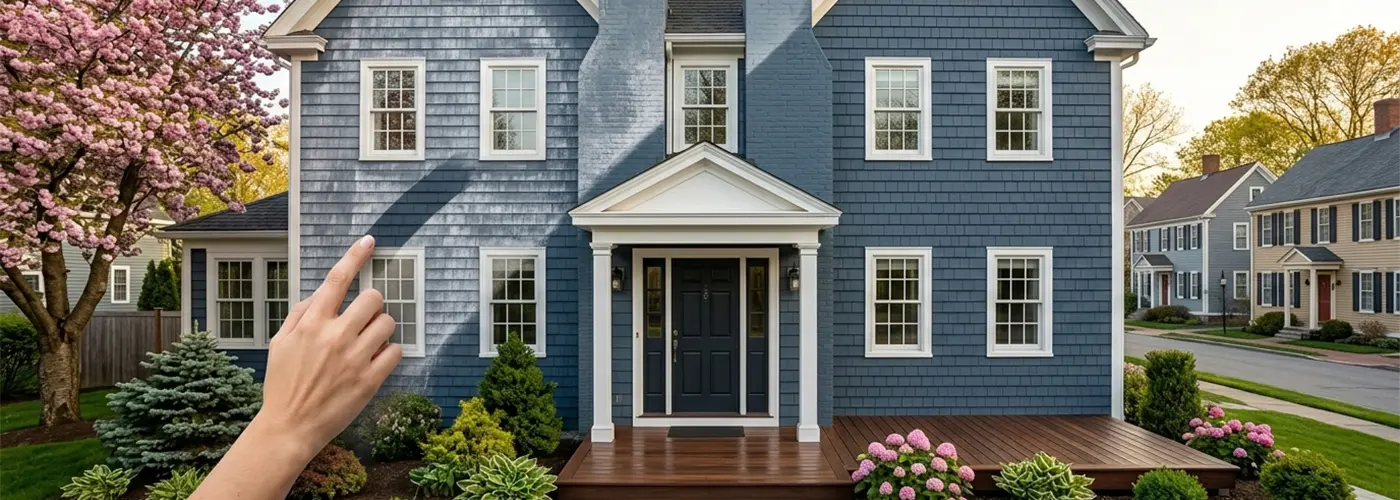
What is that white powder on my siding?
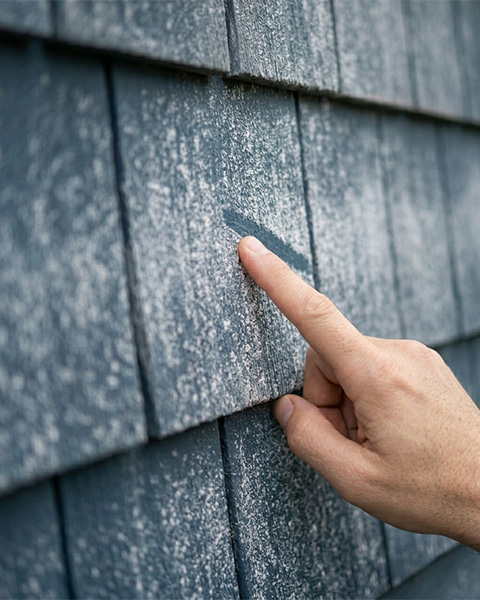
That chalky residue you see on your siding is actually oxidized material from its surface. Over time, constant exposure to sunlight, oxygen, and changing weather conditions causes the outer layer to break down. As this layer deteriorates, it turns into a fine white powder that easily rubs off onto your hands or clothes.
You may also notice that the siding looks faded compared to shaded areas, develops uneven streaks after rain or washing, and appears older than it really is. Once oxidation starts, it does not stop on its own. The surface will continue to degrade until it is properly treated.
Why does oxidation happen?
To understand the problem, it helps to know what siding is made of. Most vinyl siding contains polymers. These are long molecular chains that give the material flexibility and durability. Painted siding relies on binders and pigments to maintain color and protection.When UV radiation from the sun hits these materials, it breaks down their chemical bonds. This process is called oxidation. The degraded material rises to the surface and turns into the chalky residue you see.
Several factors accelerate oxidation:
- Prolonged sun exposure
South- and west-facing walls tend to oxidize faster because they receive the most direct sunlight. - Heat and temperature swings
Extreme heat followed by cooling cycles stresses the material and speeds up surface breakdown. - Moisture and air pollution
Humidity, rain, and airborne contaminants can intensify surface degradation over time. - Age of the siding
Even high-quality siding eventually oxidizes after years of exposure.
Oxidation is not dirt. It is a chemical change in the siding itself. That distinction matters when it comes to cleaning.
Why pressure washing doesn’t solve the problem
Many homeowners believe pressure washing will fix the problem. In reality, standard high-pressure cleaning does not properly remove oxidation. It may wash away some of the loose chalky residue, but the embedded oxidation remains on the surface. This often leads to uneven cleaning and visible streaks. High pressure can also damage the siding itself by forcing water behind the panels or stripping away protective coatings.While the siding might look cleaner at first, once it dries, the blotchy and uneven coloring usually becomes more obvious. Oxidation is a chemical issue, which means it requires the right cleaning agents and process, not just stronger water pressure.
How professional oxidation removal works
Proper oxidation removal involves a specialized, multi-step process designed specifically for vinyl and painted siding.Step 1: Surface evaluation
Before cleaning begins, the siding is inspected. We determine the oxidation level, identify any damaged sections, and test a small area to ensure the correct solution strength.Step 2: Application of oxidation remover
Next, we apply a professional-grade oxidation removal solution specifically designed for this type of buildup. These specialized cleaners break down the chalky, oxidized layer on the surface without damaging the siding underneath.Unlike standard house-wash detergents, they target the degraded polymer layer, loosen embedded residue, and prepare the surface for a smooth, even rinse. The solution is then left to dwell for the proper amount of time to ensure it works thoroughly and effectively before being rinsed away.
Step 3: Soft washing process
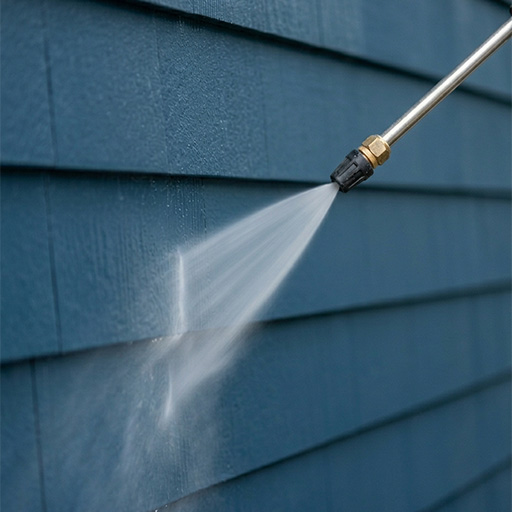
Instead of high pressure, we use a soft washing method. This means controlled, low-pressure rinsing that safely removes the dissolved oxidation without damaging the siding.
Soft washing is essential because:
- It prevents surface damage
Low pressure protects vinyl panels and painted finishes. - It eliminates streaking
Even removal ensures consistent color across the surface. - It preserves structural integrity
Water is not forced behind siding panels.
The result is a restored, more uniform appearance without the risks of traditional pressure washing.
Step 4: Final inspection
After cleaning, we evaluate the surface to confirm even color restoration and ensure all oxidation has been properly removed.What results can you expect?
Oxidation removal does not “repaint” your home, but it can significantly improve its appearance. In many cases, homeowners are surprised at how much color returns once the chalky layer is gone.You can typically expect:
- brighter, more even siding color;
- elimination of chalky residue;
- improved curb appeal;
- extended lifespan of your siding.
If oxidation has been present for many years, some permanent fading may remain. However, removing the oxidized layer prevents further rapid deterioration.
How to know if your siding needs oxidation removal
If you are unsure whether your siding is oxidized, try this simple test. Rub your hand across the surface of a sunny wall. If a white, powdery substance transfers to your skin, oxidation is present.Other signs include inconsistent coloring between shaded and sun-exposed areas and noticeable streaking after rainfall.
The sooner oxidation is treated, the better the outcome. Waiting allows deeper surface breakdown, which may eventually require repainting or replacement.
Why professional treatment matters
Oxidation removal is not the same as a regular exterior wash. It requires the right products, adequate dwell time, and carefully controlled soft-washing techniques. Using the wrong chemicals or too much pressure can cause permanent damage to the siding.That’s why our approach relies on specialized cleaners formulated to break down degraded polymers, low-pressure soft washing to safely remove the residue, protection of nearby landscaping and surrounding surfaces, and a detailed inspection before and after the process.
This focused method ensures your siding is restored safely and effectively without unnecessary risk.
Restoring your siding isn’t just about appearance. It protects your investment and extends the life of your exterior surfaces. If your home’s siding looks dull, faded, or leaves white residue behind, oxidation is likely the cause. With professional oxidation removal and soft washing, you can bring back clarity and color without risking damage from improper cleaning methods.
 Facebook
 LinkedIn
 "Pinterest") Pinterest
Pinterest Twitter