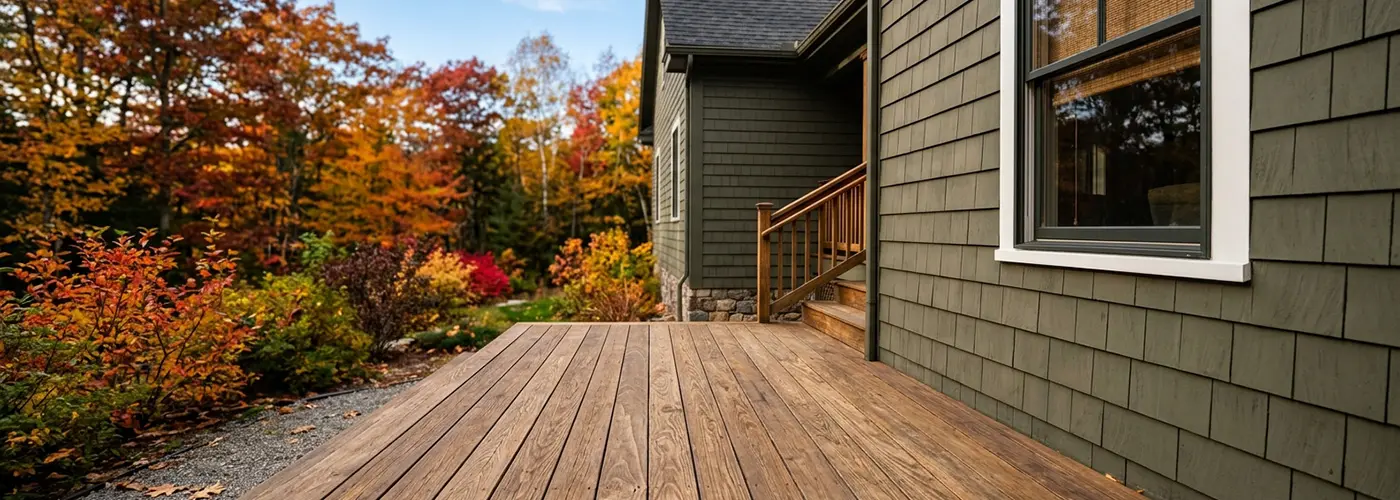
Moisture that builds up around your deck and wood siding can cause serious problems once winter sets in, especially through repeated freezing and thawing. That makes fall a good time to remove anything that traps water against the wood. Here’s what causes rot, how to catch the early signs, and the steps you can take to prevent it.
What causes wood rot
Wood rot is decay caused by fungi, and fungi need water. According to the U.S. Forest Products Laboratory, serious decay occurs only when wood moisture content rises above roughly 30 percent, and keeping wood at about 20 percent or less is the commonly recommended working limit. Wood that stays dry does not rot.In practice, wood rot on a deck or in wood siding usually starts because water gets in and stays. Leaves, dirt, moss, and algae hold moisture against the surface. A worn protective coating lets water soak in, overflowing gutters soak the same boards repeatedly, and contact with soil moves moisture straight into the wood. Freezing makes it worse, since water expands by roughly 9 percent when it turns to ice and can open up cracks that take in more water later.
Signs of wood rot to look for early
Catching rot early is the difference between a small repair and a replacement. These are the signs worth checking in the fall:- a soft spot that gives way when you press a flathead screwdriver into the board;
- dark patches or discoloration that does not wash away;
- paint or stain that is peeling, bubbling, or flaking;
- boards that crumble, feel spongy, or sound hollow;
- cracks or gaps that were not there last year.
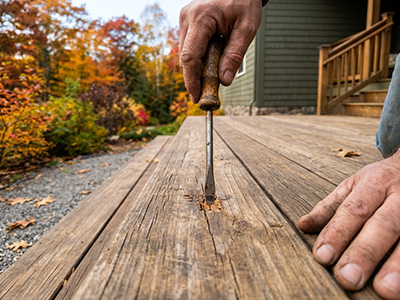
The screwdriver test is the most reliable. Sound wood resists, and rotted wood gives way easily.
Where rot usually starts
On most homes, rot starts in a few predictable areas. Board ends are especially vulnerable because exposed end grain absorbs water easily. Moisture can also collect around screws, nails, and other fasteners, where small openings allow water to sit against the wood.Areas close to the ground are another common trouble spot, since splashing rain, damp soil, and mulch can keep the lower parts of the structure wet. Wood beneath gutters and windows may also stay damp if runoff repeatedly follows the same path after storms. Tight joints and narrow gaps between boards can create similar problems when leaves, dirt, and other debris become trapped and hold moisture in place.
These are the areas worth checking first, and a quick inspection usually takes only a few minutes.
How to prevent wood rot, in order
Order matters, because sealing damp wood traps the moisture you are trying to keep out:- Clean
Clear leaves and dirt from deck gaps, board edges, and the base of wood siding with a brush, so nothing holds water against the wood. - Let it dry
Let the wood dry fully before anything else, ideally during a stretch of dry weather. - Reseal or repaint if needed
If the finish is worn, deck sealing, stain, or paint renews the protection that keeps water out. Apply it to dry, clean wood. - Check the gutters
Clean gutters and downspouts to make sure overflow isn't running down your siding or onto deck boards. - Keep distance from plants
Trim back shrubs and vines so wood gets sun and airflow, and avoid letting soil or mulch pile against it.
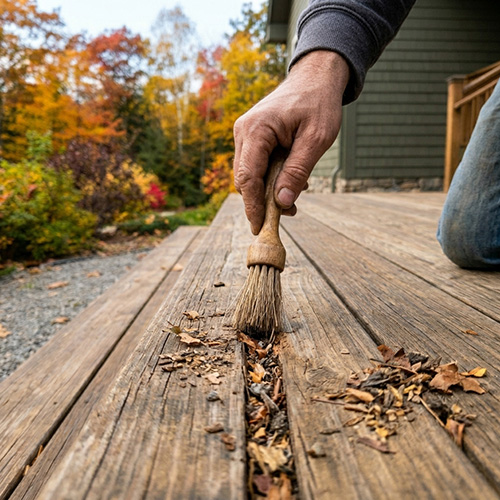
If you do this every fall, wood goes into winter drier, and that makes the biggest difference of all.
If rot has already started
When rot is advanced, repair or replace the damaged boards first, then clean. Cleaning does not fix soft or crumbling wood, and a carpenter should handle the repair.One more caution: do not use high pressure on wood. It frays the fibers and opens a path for water, which is the opposite of what you want. For mildew or growth on wood, gentler low-pressure methods such as soft washing are generally the better choice, and our mold and mildew treatment explains how we approach growth on exterior surfaces.
If you would like a second pair of eyes before winter, we are here to help. At HiCleaners, we offer a free assessment of your deck and wood surfaces. If we spot signs of rot, we will tell you honestly, so you can plan repairs before the weather turns. Request a free estimate or call 781-333-8758.
 Facebook
 LinkedIn
 Pinterest
 Twitter